

What changed • Who it affects • Why it matters
Statewide Business Pulse
▲ Moving: Road construction, rural business financing, energy logistics, summer travel support
▬ Stable: Professional services, Main Street retail, community banking, local service businesses
▼ Down / Under Pressure: Fuel-heavy businesses, delivery routes, contractor scheduling, freight margins
Watch: Diesel prices, workforce availability, construction detours, oilfield activity decisions
Today’s Signals
Transportation / Construction: $700M Road Season Is Now in Motion
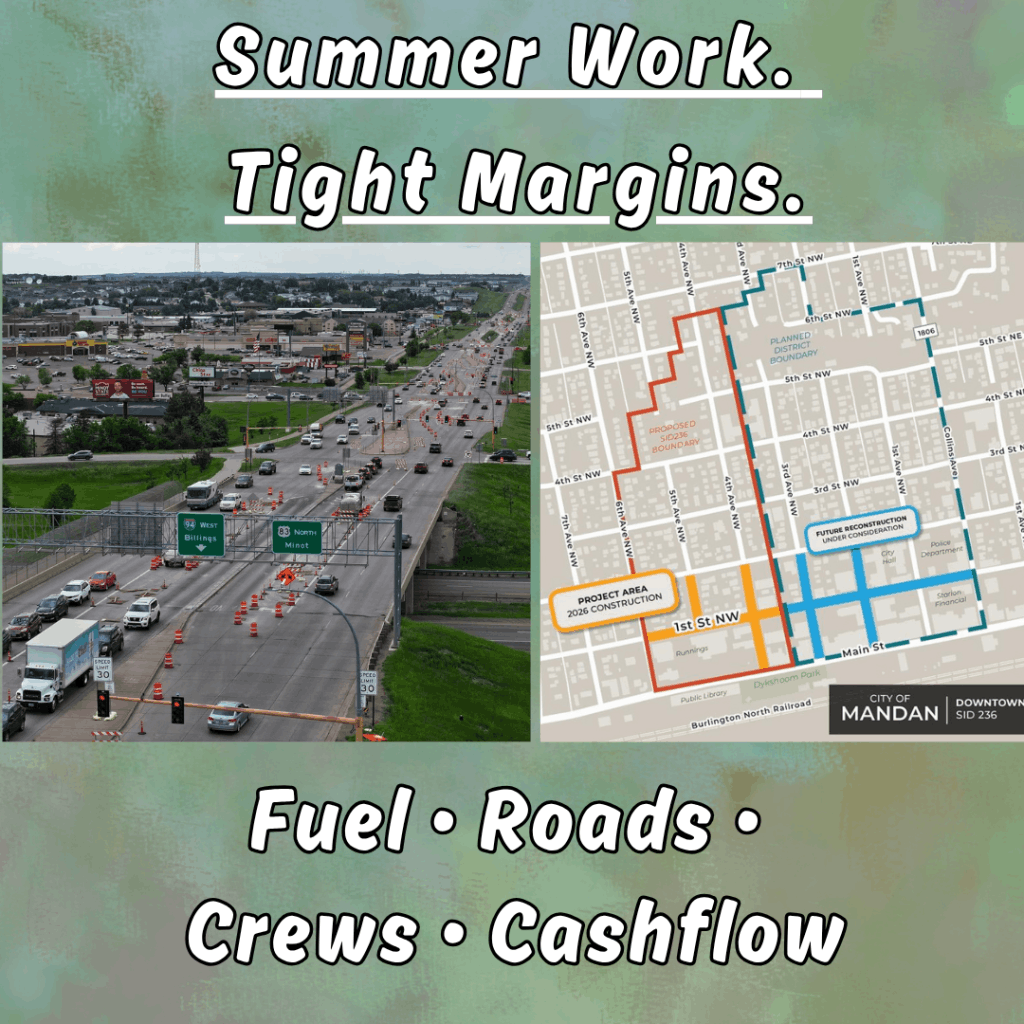
What changed: NDDOT officially opened the 2026 construction season, with about $700 million in projects planned across North Dakota.
Who it affects: Contractors, subcontractors, trucking companies, delivery drivers, concrete/asphalt suppliers, hotels, restaurants, gas stations, and businesses located near work zones.
Why it matters: Construction dollars move through many local businesses, but detours and lane reductions also create short-term friction. Businesses near affected corridors may need clearer signage, adjusted delivery windows, and more customer reminders.
Source: NDDOT — 2026 construction season kickoff
Main Street / Rural Business: Development Fund Opens Wider Door
What changed: The North Dakota Development Fund expanded eligibility to include non-primary sector businesses, opening financing options to more rural businesses and community organizations that previously did not qualify.
Who it affects: Rural retailers, service businesses, food businesses, small manufacturers, community projects, childcare-related businesses, local development groups, and business owners outside traditional “primary sector” categories.
Why it matters: This is useful beyond big industry. It may help smaller community-based businesses bridge gaps for equipment, expansion, working capital, or projects that keep people spending locally.
Source: ND Commerce — Development Fund eligibility expansion
Fuel / Delivery / Service Trades: Diesel Still Pressuring the Workday
What changed: AAA lists North Dakota’s May 26 average regular gas price at $4.146 and diesel at $5.148.
Who it affects: Lawncare crews, contractors, mobile repair businesses, food trucks, delivery services, ag haulers, oilfield service companies, and anyone pricing jobs with travel built in.
Why it matters: Fuel costs are not just a pump problem. They show up in bids, service-call fees, freight charges, vendor booth travel, and whether small operators can absorb costs without raising prices.
Source: AAA — North Dakota gas prices
Energy / Oilfield Services: Pipeline Certainty, But Growth Still Looks Cautious
What changed: Recent reporting shows the Dakota Access Pipeline may continue operating under stricter environmental and safety requirements, while oilfield operators remain careful about expansion.
Who it affects: Oilfield service firms, trucking companies, welders, equipment suppliers, lodging, restaurants, local governments, and western North Dakota support businesses.
Why it matters: Pipeline certainty helps keep energy movement stable, but cautious drilling means businesses should not assume an immediate boom. The better signal is steady demand with selective growth, not a wide-open hiring and equipment rush.
Source: Reuters — Dakota Access Pipeline update
Workforce / Hiring: Low Unemployment Keeps Labor Tight
What changed: BLS reported North Dakota’s April unemployment rate at 2.4%, second-lowest in the nation behind South Dakota.
Who it affects: Restaurants, trades, healthcare support, childcare, retail, construction, manufacturing, seasonal businesses, and employers trying to fill part-time or entry-level roles.
Why it matters: Low unemployment is good for workers, but it keeps pressure on employers who need reliable help. Businesses may need to compete with flexibility, training, predictable schedules, and clear advancement—not just wages.
Source: BLS — State Employment and Unemployment Summary
Risk / Opportunity
Risk: Fuel, freight, detours, and labor shortages can quietly squeeze margins even when customer demand looks steady.
Opportunity: Businesses that communicate early—detour maps, adjusted hours, delivery changes, service-call minimums, and seasonal pricing—can protect cash flow before customers get frustrated.