

What changed • Who it affects • Why it matters
Statewide Business Pulse
▲ Moving: North Dakota has activated $2 million in livestock-water assistance as drought conditions worsen, while USDA has issued a disaster designation covering two primary and five contiguous North Dakota counties.
▬ Stable: U.S. industrial production and manufacturing output each increased 0.2% in July. Mining also rose 0.2%, while utilities increased 0.5%. The numbers point to continued industrial activity without a broad surge.
▼ Down / Under Pressure: New U.S. housing starts fell 12.4% in July, and single-family starts dropped 9.9%. That adds another warning sign for contractors, building suppliers, real-estate businesses and communities dependent on housing growth.
Watch: Federal Reserve minutes from the July 28–29 meeting are due this afternoon. The Fed held its target rate at 3.50%–3.75% last month, but the vote was 9–3. The minutes may provide more detail on how policymakers are weighing inflation against softer economic data—important for businesses watching borrowing costs.
Today’s Signals
1. Agriculture / Rural Business: Drought response expands with $2 million for livestock-water projects
What changed:
North Dakota activated the Drought Disaster Livestock Water Supply Project Assistance Program on Tuesday, making $2 million available for livestock producers. Eligible projects include new wells, rural-water connections, pipeline extensions, pasture taps, labor, materials and equipment rentals.
Eligible producers can receive up to 65% cost share, capped at $10,000 per project, for as many as three projects. Eligibility currently applies to producers in counties with severe drought or worse, along with adjacent counties and tribal nations.
USDA also designated Golden Valley and McKenzie counties as primary natural-disaster areas, with Billings, Mountrail, Williams, Dunn and Slope counties named contiguous disaster counties. Eligible farm operators in those counties may be considered for Farm Service Agency emergency loans.
Who it affects:
Ranchers, well drillers, rural-water systems, excavation contractors, pipeline installers, equipment-rental businesses, ag lenders and businesses dependent on livestock spending.
Why it matters:
This is a direct response to an operating problem producers can’t postpone: livestock still need water even when ponds and dams dry up.
It also creates near-term work outside agriculture itself. Wells, pipelines, hookups, excavation and equipment rentals all involve North Dakota businesses.
The drought picture has deteriorated quickly. The state reports 33.6% of North Dakota in moderate drought, 28.1% in severe drought and 2.3% in extreme drought.
2. Manufacturing / Industrial Economy: Factory output continues growing, but slowly
What changed:
The Federal Reserve reported Tuesday that U.S. industrial production increased 0.2% in July, following a revised 0.3% increase in June. Manufacturing also rose 0.2%. Mining increased 0.2%, and electric and gas utilities rose 0.5%.
Manufacturing production excluding motor vehicles and parts increased 0.4%, showing stronger activity beneath the overall manufacturing number. Total industrial production was 1.1% higher than a year earlier.
Who it affects:
North Dakota manufacturers, machine shops, equipment dealers, industrial suppliers, energy businesses, freight companies and contractors serving industrial customers.
Why it matters:
The report doesn’t point to a manufacturing boom, but it also doesn’t show factories broadly pulling back.
For North Dakota suppliers, the better measure remains what is happening inside their own customer base: incoming orders, quote activity, equipment purchases and backlogs.
Businesses selling into manufacturing should also distinguish between sectors. Industrial equipment and technology-related demand can remain active even while other categories soften.
Source link:
https://www.federalreserve.gov/releases/g17/current/default.htm
3. Construction / Real Estate: Housing starts fall sharply while permits move higher
What changed:
The Census Bureau reported Tuesday that privately owned housing starts fell 12.4% in July to a seasonally adjusted annual rate of 1.239 million units. Starts were also 13.5% below July 2025.
Single-family construction fell 9.9% from June.
There is one counter-signal: building permits increased 5.0% for the month, including a 2.5% increase in single-family permits.
Who it affects:
Homebuilders, subcontractors, lumberyards, glass companies, electricians, plumbers, HVAC contractors, real-estate firms, lenders and communities trying to add housing.
Why it matters:
Starts tell us what builders are actually beginning. Permits tell us something about what could come next.
The combination—fewer starts but more permits—means it is too early to conclude that residential construction is simply headed downward. Projects may be delayed rather than abandoned.
North Dakota businesses should pay closer attention to local permits, builder backlogs and financing conditions than to the national headline alone.
Source link:
https://www.census.gov/construction/nrc/current/index.html
4. Workforce / Higher Education: New funding formula would reward programs tied to in-demand jobs
What changed:
North Dakota’s Higher Education Funding Review Committee meets today and will consider a second draft of a new higher-education funding formula.
The draft would create performance funding tied specifically to degree completions in programs aligned with North Dakota’s in-demand occupations list, prepared by the Workforce Development Council and Job Service North Dakota.
The proposal gives higher performance payments to several workforce-focused programs. For example, the draft provides $13,500 per career and technical education degree completion at participating institutions and the same amount for certain education and health-science bachelor’s completions.
Who it affects:
Employers, colleges, career and technical programs, healthcare organizations, manufacturers, trades employers and students choosing workforce-oriented programs.
Why it matters:
State funding formulas influence what colleges can afford to expand.
If this structure eventually becomes law, institutions would have a financial reason to increase completions in programs tied directly to occupations North Dakota employers say they need.
The proposal is still a draft. But for employers frustrated by the disconnect between available training and available jobs, this is worth following before the 2027 session begins.
Source links:
https://ndlegis.gov/assembly/69-2025/committees/interim/higher-education-funding-review-committee
https://ndlegis.gov/assembly/69-2025/interim/27-0134-02000.pdf
Livestream:
https://video.ndlegis.gov/
5. Finance / Credit: Federal Reserve minutes could clarify where interest rates go next
What changed:
The Federal Reserve releases minutes this afternoon from its July 28–29 policy meeting. At that meeting, the Fed held its federal-funds target range at 3.50% to 3.75% on a 9–3 vote.
Who it affects:
Businesses using lines of credit, equipment financing, commercial mortgages, construction loans and other variable-rate debt, along with lenders and businesses planning major purchases.
Why it matters:
The Fed’s rate doesn’t equal the interest rate on a North Dakota business loan, but it influences borrowing costs throughout the financial system.
Three dissenting votes make today’s minutes worth watching. Businesses considering a major financed purchase may get a better sense of whether policymakers are leaning toward holding rates steady or tightening further.
For owners, the practical question is less about predicting the Fed and more about knowing how much a half-point change in financing cost would affect the payment on the project they’re considering.
Source links:
https://www.federalreserve.gov/monetarypolicy/fomccalendars.htm
https://www.federalreserve.gov/newsevents/pressreleases/monetary20260729a.htm
Risk / Opportunity
Risk:
Today’s signals don’t point in one direction. Drought is creating immediate problems for livestock producers, housing construction softened sharply in July, and borrowing costs remain uncertain. Businesses that depend on agriculture, construction or financed purchases may feel those pressures differently even if broader economic indicators remain relatively steady.
Opportunity:
Some of the response to those problems creates business activity of its own. Drought funding means wells, pipelines, excavation and equipment. Higher-education funding discussions could push more resources toward technical and in-demand programs. Manufacturing is still growing modestly rather than contracting.
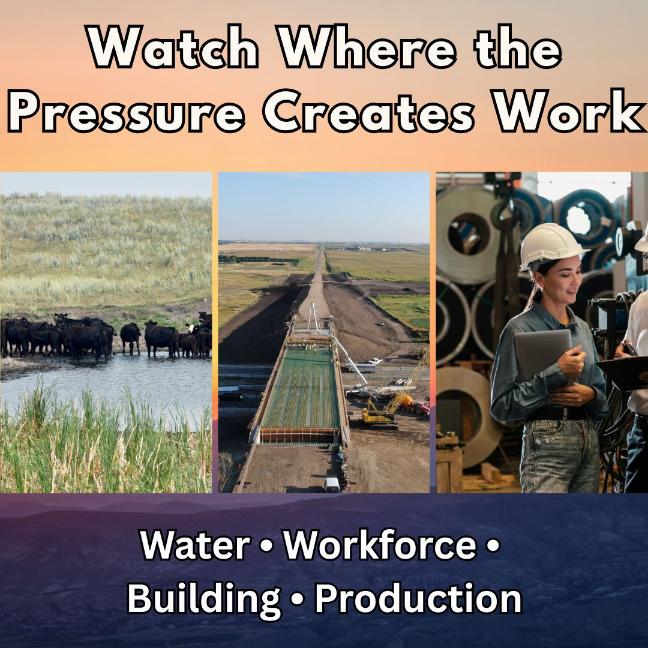
The useful question is often: Where will the response create work?