

What changed • Who it affects • Why it matters
Statewide Business Pulse
▲ Moving: Retail taxable sales, manufacturing, construction, rural business financing, summer vendor/event activity
▬ Stable: Workforce availability, Main Street optimism, oilfield production planning
▼ Down / Under Pressure: Oil-and-gas taxable sales, professional services, healthcare/social assistance taxable sales, business profit margins
Watch: Pricing decisions, labor quality, vendor fee deadlines, energy-sector caution despite higher oil prices
Today’s Signals
Retail / Main Street: Taxable sales rose, but the lift is uneven
What changed: North Dakota taxable sales and purchases increased 4.24% in the first quarter of 2026 compared with the same period in 2025, totaling $5.96 billion. Retail trade grew 3.3%, manufacturing jumped 85.5%, and construction rose 25.3%, while mining/oil and gas extraction fell 19.4% and professional, scientific, and technical services dropped 7.5%.
Who it affects: Retail stores, contractors, manufacturers, suppliers, service firms, oilfield support businesses, accountants, consultants, and downtown businesses.
Why it matters: The headline number looks healthy, but the sector details show a split economy. Some businesses may see more traffic and sales, while others may be dealing with slower project decisions, cautious customers, or weaker margins.
Source link:
https://www.tax.nd.gov/news/tax-commissioner-releases-first-quarter-2026-taxable-sales-data
Small Business Climate: Owners are steady, but still cautious
What changed: NFIB’s April Small Business Optimism Index rose slightly to 95.9, but remained below its long-term average of 98.0. The Uncertainty Index stayed high at 88, and labor quality remained a top concern for many owners.
Who it affects: Small employers, restaurants, trades, retailers, service firms, home-based businesses, and businesses deciding whether to hire, expand, or raise prices.
Why it matters: This is not a panic signal, but it is not a green-light signal either. Owners should watch cash flow, pricing, labor needs, and customer demand before taking on large expenses.
Workforce: North Dakota remains tight
What changed: North Dakota’s April unemployment rate was 2.4%, the second-lowest in the nation behind South Dakota.
Who it affects: Every employer trying to hire, especially construction firms, restaurants, healthcare offices, childcare providers, trucking/logistics firms, and seasonal businesses.
Why it matters: Low unemployment is good for workers, but it keeps hiring difficult for employers. Businesses may need to simplify duties, cross-train existing staff, use flexible shifts, or improve retention before peak summer demand arrives.
Source link:
https://www.bls.gov/news.release/laus.nr0.htm
Rural Business Finance: More small-town businesses may qualify for NDDF financing
What changed: The North Dakota Development Fund expanded eligibility to include more non-primary-sector businesses, certain nonprofits, chambers/economic development groups, and political subdivisions in smaller rural communities. Financing may be used for working capital, equipment, real estate acquisition, and interim construction, with loan amounts from $25,000 to $1 million.
Who it affects: Rural retailers, service businesses, community organizations, small-town developers, equipment-heavy businesses, and businesses that previously did not fit primary-sector funding rules.
Why it matters: This could give rural Main Street businesses another financing path for equipment, building improvements, short-term cash flow, or projects that need bridge funding before permanent financing is ready.
Source link:
https://www.commerce.nd.gov/news/north-dakota-development-fund-expands-eligibility-support-rural-businesses
Energy / Oilfield Services: DAPL stability helps, but drilling is still cautious
What changed: The Dakota Access Pipeline may continue operating under stricter environmental and safety requirements. At the same time, North Dakota oil operators are still cautious about ramping up drilling despite higher oil prices; Reuters reported the May rig count was unchanged from April at 26 rigs, while March production rose to about 1.14 million barrels per day.
Who it affects: Oilfield service companies, trucking firms, welders, equipment suppliers, mineral owners, lodging, restaurants, and western ND communities tied to oil activity.
Why it matters: Pipeline continuity helps keep product moving, but operators are not spending like a full boom is underway. Oilfield-adjacent businesses should plan for steady or modestly higher demand, not a sudden surge.
Source links:
https://www.reuters.com/business/energy/dakota-access-oil-pipeline-operate-with-stricter-environmental-safety-mandates-2026-05-21/
https://www.reuters.com/business/energy/us-oil-operators-north-dakota-cautious-drilling-despite-price-rise-2026-05-22/
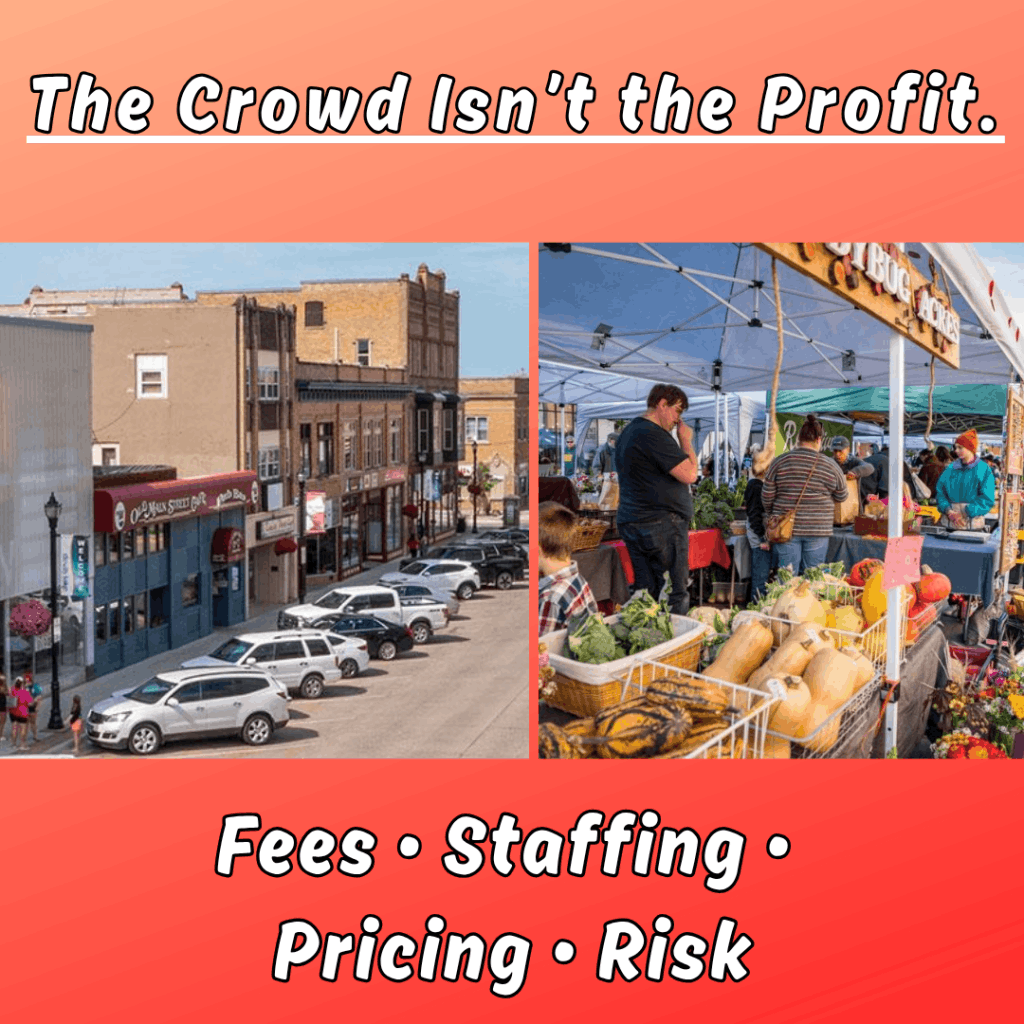
Vendors / Food Trucks / Event Businesses: Booth math matters before the crowd arrives
What changed: Summer event fees and requirements are already shaping vendor decisions. Downtown Bismarck lists its standard food vendor booth fee at $300 after April 25, plus a $150 refundable cleanup deposit. Grand Forks’ Downtown Street Fair lists street vendor booths from $275 and snack vendor booths from $400, while noting some vendor categories are already closed or waitlisted.
Who it affects: Food trucks, crafters, cottage-food sellers, handmade goods vendors, boutique pop-ups, youth entrepreneurs, sponsors, and event organizers.
Why it matters: A crowded event does not automatically mean profit. Vendors need to know booth fee, travel cost, labor cost, licensing, power access, inventory, weather risk, and break-even sales before committing.
Source links:
https://downtownbismarck.com/fv/
https://downtownforks.com/downtown-street-fair
Sales Tax / Compliance: June has near-term filing deadlines
What changed: The North Dakota Tax Commissioner lists June 1 as the due date for April monthly sales/use/gross receipts tax returns and April monthly restaurant/lodging tax returns because May 31 falls on a Sunday. It also lists June 30 as the due date for May monthly sales/use/gross receipts tax returns and May monthly restaurant/lodging tax returns.
Who it affects: Retailers, restaurants, lodging businesses, mobile vendors, food trucks, online sellers, and businesses collecting city or local taxes.
Why it matters: This is a practical cash-flow and compliance reminder. Businesses collecting sales tax should avoid treating those dollars like operating cash, especially during summer event season.
Source link:
https://www.tax.nd.gov/sales-and-use-tax-deadlines
Risk / Opportunity
Risk: Sales are up on paper, but labor, pricing, sector unevenness, booth costs, and tax deadlines can hide pressure inside individual businesses.
Opportunity: Rural financing expansion and summer event traffic give smaller communities a chance to move money locally—especially for businesses that prepare pricing, staffing, inventory, licensing, and break-even numbers before the rush hits.