

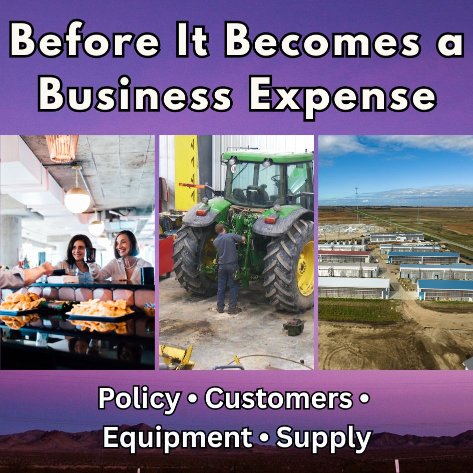
What changed • Who it affects • Why it matters
Statewide Business Pulse
▲ Moving: North Dakota lawmakers meet today with a unusually business-heavy list of draft legislation covering data centers, right-to-repair, public infrastructure funding, childcare assistance and direct vehicle sales. These are drafts, not enacted policy, but several could materially affect operating costs, development and competition if they advance.
▬ Stable: U.S. business inventories were essentially unchanged in June even though manufacturers’ and trade sales declined 1.1% for the month. The inventory-to-sales ratio remains below a year ago, suggesting businesses nationally are not sitting on unusually heavy stocks.
▼ Down / Under Pressure: July U.S. retail and food-service sales fell 0.6% from June, although they remained 5.0% above July 2025. For Main Street businesses, that combination says consumers are still spending more than last year but pulled back noticeably during July.
Watch: The Federal Reserve releases July industrial production Tuesday, August 18, giving manufacturers, suppliers and energy businesses a fresh look at factory, mining and utility activity. North Dakota’s Clean Sustainable Energy Authority also meets Tuesday.
Today’s Signals
1. Legislature / Business Regulation: Several major business-policy drafts move into one room today
What changed:
North Dakota Legislative Management meets from 10 a.m. to 3:15 p.m. today with more than 20 bill and resolution drafts posted for consideration. Business-related drafts include public improvement project funding, county and township infrastructure, direct motor-vehicle sales, childcare assistance, right-to-repair and multiple data-center proposals.
Who it affects:
Business owners statewide, contractors, equipment dealers and repair shops, auto dealers, technology companies, data-center developers, utilities, local governments, childcare providers and employers struggling with workforce availability.
Why it matters:
This meeting deserves more attention than a typical interim meeting because several issues businesses have been watching separately are now appearing as actual draft legislation.
The drafts are not law and are not yet 2027 bills. But this is where lawmakers begin deciding what language may move forward.
For NDBU, today’s meeting provides an early look at which business issues are gaining enough traction to become part of the next legislative debate.
Source link:
https://ndlegis.gov/events/2026/08/17/legislative-management
Livestream:
https://video.ndlegis.gov/
2. Technology / Energy: Data-center debate moves from study to multiple legislative proposals
What changed:
Among today’s Legislative Management documents are separate drafts addressing:
- data-center owner and operator requirements;
- prohibiting state agencies from entering nondisclosure agreements concerning data centers;
- a proposed moratorium on issuing data-center permits; and
- a resolution calling for greater transparency around proposed, constructed or developed data centers.
Who it affects:
Data-center developers, utilities and cooperatives, electrical contractors, construction firms, landowners, local governments, economic-development organizations and businesses concerned about future power capacity and rates.
Why it matters:
North Dakota’s data-center discussion has moved beyond whether the industry should grow here. Lawmakers are now debating how development should occur, what information should be public and whether additional limits or conditions are needed.
That matters to businesses on both sides of the issue. Large developments can generate construction, electrical, technology and supplier work, while the scale of their electricity demand raises legitimate questions about infrastructure and who ultimately pays for it.
Businesses should watch the actual language rather than assuming every data-center proposal is either pro-development or anti-development.
Source link:
https://ndlegis.gov/events/2026/08/17/legislative-management
3. Agriculture / Livestock: More CRP acreage becomes part of the drought response
What changed:
USDA’s Farm Service Agency updated its emergency CRP haying and grazing eligibility on August 13 as drought conditions continue. Counties can qualify when they reach D2 drought status or experience at least a 40% loss in forage production. USDA updates eligibility maps each Thursday.
Eligible producers may use certain Conservation Reserve Program acreage for emergency haying or grazing, subject to conservation-plan and program requirements. USDA specifically tells producers to contact their local service center before beginning work.
Who it affects:
Ranchers, livestock producers, hay growers, truckers, auction markets, feed suppliers, lenders and rural businesses dependent on livestock income.
Why it matters:
The immediate problem for many livestock operators isn’t simply crop yield. It’s whether enough affordable feed exists to keep animals through fall and winter.
Opening additional acreage can help individual producers stretch feed supplies, but it doesn’t erase the broader drought problem.
There is also a compliance issue: producers should not assume CRP ground can automatically be cut or grazed because neighboring counties qualify. Eligibility and approved practices vary.
Source link:
https://www.fsa.usda.gov/resources/programs/conservation-reserve-program/emergency-haying-grazing
4. Retail / Main Street: July spending pulled back after earlier gains
What changed:
The Census Bureau reported Friday that U.S. retail and food-service sales totaled $763.6 billion in July, down 0.6% from June. Sales remained 5.0% above July 2025, and May-through-July sales were 6.3% higher than the same three months last year.
Who it affects:
Retailers, restaurants, Main Street businesses, wholesalers, e-commerce sellers, makers and artisans, commercial landlords and businesses supplying consumer-facing companies.
Why it matters:
The year-over-year number and the monthly number tell different stories.
Consumers are spending more dollars than they did last summer, but July’s decline suggests businesses shouldn’t assume that higher annual sales automatically mean customers are becoming less cautious.
For a North Dakota business, the useful comparison is internal: July traffic, average ticket, units sold and gross margin versus both June and July 2025. Revenue alone can hide whether customers bought fewer items at higher prices.
Source link:
https://www.census.gov/retail/sales.html
5. Supply Chain / Business Planning: Inventories stayed flat while sales declined
What changed:
Separate Census data released Friday show combined manufacturing and trade sales fell 1.1% in June from May, while inventories were essentially unchanged at approximately $2.74 trillion. Sales remained 10.0% higher than June 2025, while inventories were up 3.0%.
The national inventory-to-sales ratio stood at 1.30, compared with 1.39 one year earlier.
Who it affects:
Manufacturers, wholesalers, retailers, distributors, equipment dealers and businesses carrying expensive parts or seasonal inventory.
Why it matters:
This isn’t signaling a national inventory pileup yet.
For small businesses, however, inventory can become a cash-flow problem long before it becomes an economic statistic. Products sitting on a shelf represent money that cannot pay payroll, utilities or debt.
Late summer is a reasonable time for businesses carrying inventory to identify slow-moving products before placing large fall or holiday orders.
Source link:
https://www.census.gov/mtis/current/index.html
6. Equipment / Independent Repair: North Dakota lawmakers now have their own right-to-repair draft
What changed:
Today’s Legislative Management materials include a draft specifically addressing repair of equipment and motor vehicles by owners or independent repair providers.
That puts right-to-repair into North Dakota’s own legislative pipeline following the recent federal Deere settlement that has already increased attention on access to diagnostic tools and repair information.
Who it affects:
Farmers, ranchers, contractors, independent mechanics and repair shops, equipment dealers, vehicle owners and businesses where downtime is expensive.
Why it matters:
The practical question isn’t ideological. It’s whether an owner or independent shop can diagnose and repair equipment quickly enough to get it working again.
North Dakota’s proposal should be evaluated on the actual language—what equipment it covers, what manufacturers must provide, what protections remain for proprietary systems and whether independent shops face new responsibilities.
This is one to follow as the draft becomes more defined.
Source link:
https://ndlegis.gov/events/2026/08/17/legislative-management
Risk / Opportunity
Risk:
A quieter economic headline can hide very different conditions underneath. Retail sales fell in July, drought continues to pressure livestock operations, and businesses carrying inventory can find cash tied up quickly when sales slow. Meanwhile, several issues capable of changing business costs or competition are already moving through North Dakota’s pre-session legislative process.
Opportunity:
Today’s legislative agenda also shows where future business activity may develop. Infrastructure funding means contracting and supplier work. Data-center investment creates electrical, construction and technical demand. Right-to-repair could expand opportunities for independent shops. Childcare policy can affect workforce availability well beyond the childcare industry itself.
The advantage goes to businesses that see these developments before they become a bid, regulation, expense or customer need.