

What changed • Who it affects • Why it matters
Statewide Business Pulse
▲ Moving: North Dakota employers got a new look yesterday at the state’s next workforce push. Registration opened for the Governor’s Workforce Summit on September 23, where the Workforce Development Council will release new statewide recommendations. The agenda includes AI, emerging technology, skills development and employer workforce needs.
▬ Stable: North Dakota’s fall direct-to-consumer season gets underway in Dickinson this afternoon. More than 75 North Dakota companies are scheduled for the Pride of Dakota Showcase, representing food producers, makers, artisans and other small product businesses.
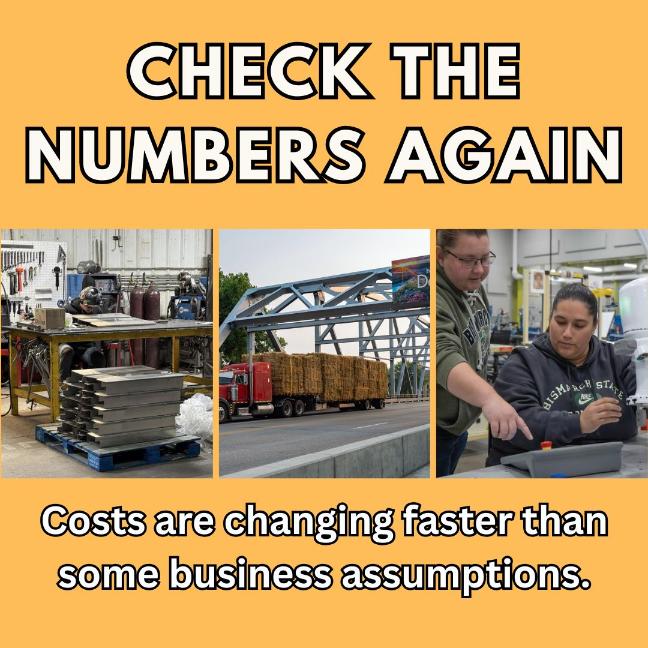
▼ Down / Under Pressure: The cost pressure businesses have been watching showed up clearly in yesterday’s Producer Price Index. U.S. wholesale prices rose 0.4% in August and 5.4% from a year earlier. Diesel prices jumped 24.1% in a single month, feeding directly into transportation and goods costs.
Watch: The August Consumer Price Index will be released at 7:30 a.m. Central today, after this briefing is published. It is the final major inflation reading before the Federal Reserve’s September 15–16 meeting. Economists surveyed by Reuters expect headline prices to have risen about 0.4% in August, with gasoline contributing to the increase.
Today’s Signals
1. Business Costs / Inflation: Yesterday’s wholesale inflation report explains where some price pressure is coming from
What changed
The Bureau of Labor Statistics reported Thursday that the Producer Price Index increased 0.4% in August, after a revised 0.1% increase in July.
Over the past 12 months, producer prices increased 5.4%, up from 4.8% in July.
Energy was a major driver.
Energy prices rose 4.2% during August, and diesel prices increased 24.1% in one month. AP reports diesel prices were 78% higher than a year earlier.
The pressure wasn’t limited to fuel. Prices also increased for airline transportation, hospital services and some electronic components.
Who it affects
Manufacturers, contractors, trucking companies, agriculture, retailers, wholesalers, service businesses and companies purchasing materials or inventory.
Why it matters
PPI measures prices earlier in the supply chain than the consumer inflation report most people hear about.
That makes yesterday’s number useful to a business owner because it can show cost pressure before all of it reaches the customer.
Diesel is the clearest example.
A retailer may never purchase a gallon of diesel. But the truck delivering its inventory does.
A contractor may absorb higher freight on materials. A farmer pays it directly during harvest. A manufacturer can encounter it in both incoming materials and outgoing freight.
The practical question heading into fall is whether a business is still pricing jobs, products or deliveries using cost assumptions that are already outdated.
Source links:
Reuters — August producer prices and business-cost pressures
Associated Press — Wholesale inflation and diesel costs
2. Credit / Finance: Today’s inflation report could settle—or further complicate—the September rate decision
What changed
The Consumer Price Index for August will be released at 7:30 a.m. Central today.
Economists surveyed by Reuters expect consumer prices to have increased roughly 0.4% during August, with gasoline contributing significantly to the increase. Core inflation, excluding food and energy, is expected to be considerably softer.
Yesterday’s producer-price report already showed inflation accelerating further up the supply chain.
The Federal Reserve meets September 15–16.
Who it affects
Businesses with variable-rate loans, farmers using operating credit, companies financing inventory or equipment, commercial real-estate borrowers, homebuyers and entrepreneurs seeking financing.
Why it matters
This is one place where timing matters.
Because the CPI number is released after this briefing, we aren’t going to guess what it says.
But businesses should understand what is riding on it.
Higher-than-expected consumer inflation would add to the argument for another rate increase. A softer reading could give the Federal Reserve more reason to hold rates where they are.
Either way, owners waiting for significantly cheaper borrowing should be cautious about building a purchase or expansion decision around that assumption.
Today’s CPI gives us another piece of evidence. Wednesday’s Federal Reserve decision gives us the answer.
Source links:
Reuters — What economists expect from today’s CPI report
U.S. economic release calendar — September CPI and Federal Reserve dates
3. Workforce: North Dakota will release its next statewide workforce recommendations September 23
What changed
North Dakota Commerce announced Thursday that registration has opened for the 2026 Governor’s Workforce Summit, scheduled for September 23 at Bismarck State College.
The Workforce Development Council is expected to release new statewide recommendations during the event.
The agenda also includes employer discussions around artificial intelligence, emerging technology, future skills and changes needed in North Dakota’s workforce system.
Who it affects
Employers struggling to hire, manufacturers, contractors, health-care providers, workforce-training organizations, educators, economic-development groups and businesses trying to understand how AI may change jobs and skill requirements.
Why it matters
The value here isn’t another conference date.
It’s the new statewide recommendations.
North Dakota employers have repeatedly identified workforce availability as a constraint on growth. The next useful question is what the state proposes to do differently about it.
Those recommendations deserve scrutiny when they’re released.
Are they practical for a 15-person manufacturer in Jamestown?
Can a contractor in Dickinson use them?
Do they help a rural employer that can find work but can’t find people?
Those are better measures than the number of programs created.
Source links:
North Dakota Commerce — September 10 Workforce Summit announcement
North Dakota Commerce — Governor’s Workforce Summit agenda
4. Housing / Construction / Credit: Higher rates are showing up in the housing market again
What changed
U.S. existing-home sales fell 2% in August to their lowest level in 14 months, according to data released Thursday.
The decline came as mortgage rates moved higher again. The average 30-year fixed mortgage rate was around 6.7% entering September.
Inventory moved in the opposite direction, increasing 5.9% from a year earlier.
Who it affects
Homebuilders, contractors, electricians, plumbers, glass companies, real-estate professionals, lenders, building-material suppliers and businesses whose customers depend on home equity or housing transactions.
Why it matters
This is national data, so it shouldn’t be treated as a North Dakota housing report.
It is still a useful business signal.
Housing transactions create work well beyond the real-estate office. They generate remodeling, flooring, glass, appliances, inspections, lending, moving and other purchases.
When financing costs reduce the number of transactions, those secondary purchases can slow too.
For North Dakota contractors and home-related businesses, the better comparison is now local demand against the national slowdown. If your market is holding up, that’s useful information in itself.
Source link:
Reuters — August U.S. existing-home sales and mortgage rates
5. Makers / Main Street: More than 75 North Dakota companies get a sales floor in Dickinson today
What changed
The Dickinson Pride of Dakota Showcase opens at 3 p.m. Mountain today at the West River Ice Center and continues Saturday.
More than 75 North Dakota companies are expected, including food producers, artists, authors, jewelry makers, apparel companies, sporting-goods businesses and other locally made product businesses.
The event also includes products from the newer Pride of Dakota Fresh program and participation from the North Dakota Farmers Market and Growers Association.
Who it affects
Makers, artisans, food producers, farm-direct businesses, small manufacturers and independent product brands.
Why it matters
We mentioned the approaching event earlier this week. Today’s development is that the selling actually begins.
For small product businesses, customer access is a real business constraint.
A maker can build a good product in Bowman, Bottineau or Beulah and still struggle to reach enough buyers to turn it into a sustainable business.
Events like this create a relatively low-cost way to test products and pricing outside a business’s home market and build customers without opening another storefront.
For NDBU, it’s also a reminder that entrepreneurship in North Dakota isn’t limited to technology startups or companies seeking venture capital. A food producer, artist or small manufacturer trying to turn a product into a business belongs in that conversation too.
Source links:
North Dakota Department of Agriculture — Dickinson Pride of Dakota Showcase
North Dakota Department of Agriculture — September 11–12 Showcase details
Risk / Opportunity
Risk: Yesterday’s PPI report makes the fuel story broader than the price displayed at the pump. A 24.1% monthly jump in diesel can move through freight, materials, inventory and job costs before a business recognizes how much its margin has changed.
Opportunity: The Workforce Development Council’s September 23 recommendations are worth watching closely. If the state is going to change how it approaches worker recruitment, training and technology, business owners should judge those ideas against what actually prevents them from filling jobs—not against how good a program sounds on paper.
Watch today: The CPI report arrives at 7:30 a.m. Central. Rather than revise this briefing around a single headline number, we’ll carry the actual result—and what it changes for businesses and next week’s Federal Reserve decision—into Monday’s Federal Roundup.