

What changed • Who it affects • Why it matters
Statewide Business Pulse
▲ Moving: New-business activity, employer-funded skills training, work-based learning, rural recruiting, artist and maker development
▬ Stable: Demand for technical workers, Main Street services, internships and employer-led workforce pipelines
▼ Down / Under Pressure: Employers struggling to build their own talent pipeline, small firms competing for experienced workers, businesses trying to turn one-person ventures into sustainable companies
Watch: Today’s Northeast ND virtual job fair; workforce-training grant applications; Regional Workforce Impact Program decisions expected next week; July 29 federal Seed Fund session; July 30 LIFT deadline.
Today’s Signals
1. Entrepreneurs / Small Business: North Dakota is part of a continuing business-startup story
What changed:
U.S. Census data show 220 business applications were filed in North Dakota during the week ending June 27, compared with 180 in each of the prior two weeks. Nationally, June business applications rose 1.1% from May to 531,423. An application is not the same thing as a successful new business, but the numbers support the broader national discussion about elevated entrepreneurial activity.
Who it affects:
Entrepreneurs, accountants, bookkeepers, banks, insurers, commercial landlords, website developers, retailers, contractors, home-based businesses and communities trying to grow their local business base.
Why it matters:
New firms create customers for other firms. Every new business eventually needs some combination of banking, insurance, accounting, supplies, equipment, marketing and professional help. The bigger North Dakota question is how many of these startups survive, grow and eventually hire.
Source links:
Census Business Formation Statistics
North Dakota Business Applications — FRED/Census
2. Trades / Employer Training: Businesses can apply directly for technical-skills funding
What changed:
Commerce’s Technical Skills Training Grant application period is open. Eligible North Dakota businesses, training providers, colleges, nonprofits, local governments and trade organizations can develop or expand accelerated non-degree training. The program includes employer upskilling, onboarding and safety training, as well as training related to automation. A 1:1 match is required.
Track limits currently include:
- Up to $200,000 for qualifying new or expanded accelerated training programs
- Up to $100,000 for employer-led incumbent-worker training
- Up to $200,000 for automation-related workforce training, with certain feasibility studies eligible for up to $100,000
Who it affects:
Manufacturers, contractors, trucking firms, repair shops, trades employers, health care businesses, technology companies and employers struggling to find fully trained workers.
Why it matters:
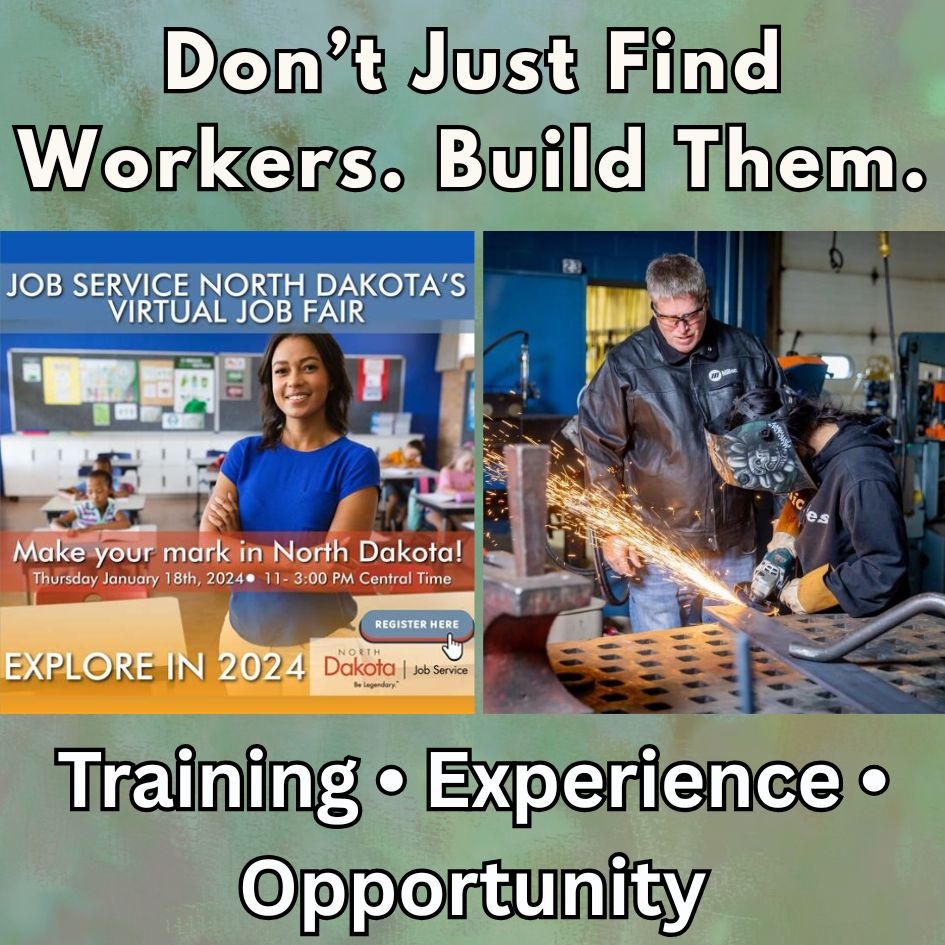
Businesses frequently say they can find people but not people with the exact skills they need. This program gives employers another option: help build the training instead of waiting for the perfect applicant to appear.
Source link:
North Dakota Technical Skills Training Grant
3. Education / Workforce Pipeline: Work-based learning moves into implementation tomorrow
What changed:
North Dakota Career and Technical Education’s current Work-Based Learning Coordinator Training concludes today, July 23, followed by an implementation and mentorship period beginning July 24 and running through September 10. Separately, NDCTE provides employers access to tools that allow businesses to connect with schools and students, offer work-based learning and discuss future career opportunities.
Who it affects:
Trades businesses, manufacturers, professional-service firms, health care providers, retailers, schools and employers worried about their future workforce.
Why it matters:
This is the earlier end of workforce development. A student who sees an actual workplace, meets an employer and understands the career before graduation is much easier to recruit later than someone who never knew the occupation existed.
Source links:
NDCTE Work-Based Learning
NDCTE Business & Industry Employer Resources
4. Rural Workforce: Northeast North Dakota job fair is today
What changed:
Job Service North Dakota is holding the Real. Good. Northeast North Dakota Virtual Rural Job Fair today from 11:00 a.m. to 2:00 p.m. Central. Businesses in Walsh, Nelson, Pembina and rural Grand Forks counties can participate.
Who it affects:
Employers and job seekers in northeast North Dakota, including small-town businesses that struggle to attract applicants from outside their immediate community.
Why it matters:
A rural employer may have to sell both the job and the community. Virtual recruiting lets businesses reach people who would never drive across the state simply to investigate an opening.
Source links:
Northeast North Dakota Virtual Rural Job Fair
Job Service North Dakota Events
5. Internships / Small Employers: Operation Intern funding has reached the waitlist stage
What changed:
Commerce’s Operation Intern page now says new applicants will be placed on a waitlist in case previously awarded employers do not use their funds. Eligible employers can receive up to $25,000 per funding round, with a maximum of five interns per round.
Who it affects:
Small businesses, professional firms, manufacturers, technology companies and employers that use internships as a recruiting pipeline.
Why it matters:
The waitlist status itself says something: employer demand for internship assistance is strong enough to exhaust currently available funding. Businesses that use internships successfully should plan early for the next funding round rather than wait until they already need summer help.
Source link:
North Dakota Operation Intern
6. Artisans / Creative Businesses: FY27 professional-development money is available
What changed:
The North Dakota Council on the Arts is accepting FY27 Professional Development Grant applications from individual artists, arts educators, nonprofit arts organizations and educational institutions. Grants reimburse up to $1,000 or 80% of eligible project costs, whichever is less. Applications generally must be submitted six weeks before the activity begins.
The Council also has a September 20 second-round deadline for Community Arts Access grants of up to $4,000 for qualifying arts activities in North Dakota communities.
Who it affects:
Artists, art educators, galleries, community arts groups, performing artists, traditional craftspeople and communities using arts programming to draw customers or visitors.
Why it matters:
An artisan is still running a business when they’re paying for advanced training, learning a new process or building a stronger market for their work. A $1,000 grant won’t build a company, but it can reduce the cost of gaining a skill that produces new work or reaches new customers.
Source links:
NDCA Professional Development Grants
NDCA Community Arts Access
7. Workforce Funding: Regional grant decisions are due next week
What changed:
Commerce is currently reviewing applications for the Regional Workforce Impact Program. The review period runs through July 26, with applicants scheduled to receive funding decisions during the week of July 27. The program supports regional strategies aimed at specific workforce problems.
Who it affects:
Employers, workforce organizations, communities, schools, training providers and regional economic-development groups.
Why it matters:
These awards can show where North Dakota’s next workforce experiments will happen. Employers should watch for funded projects in their region because they may create training, recruitment, child care, transportation or other workforce resources businesses can actually use.
Source link:
Regional Workforce Impact Program
Risk / Opportunity
Risk:
North Dakota can create plenty of job openings without actually solving its workforce problem. Businesses that depend entirely on finding already-trained employees remain vulnerable when the same limited group of workers is being recruited by everyone else.
Opportunity:
Today’s signals point toward a different approach: grow some of the workforce yourself. Technical-training grants, work-based learning, internships and regional programs give employers ways to influence who enters their industry and what skills those workers bring with them. Meanwhile, continued business formation means established companies should also be watching for new customers, suppliers and competitors.