

What changed • Who it affects • Why it matters
Statewide Business Pulse
▲ Moving: Primary election activity • local sales tax decisions • rural business financing • taxable sales growth • seasonal agriculture service demand
▬ Stable: Core retail activity • workforce demand • cautious oilfield planning • early summer Main Street traffic
▼ Down / Under Pressure: Businesses facing local tax uncertainty • employers competing for reliable workers • oilfield service firms waiting on stronger drilling signals • rural communities with limited financing options
Watch: Election results tonight • local sales tax changes • Measure 1 outcome • June rural business grant deadlines • crop and pest conditions • oil price stability
Today’s Signals
1. Election Day / Business Costs: Primary results could shape local costs and policy direction
What changed:
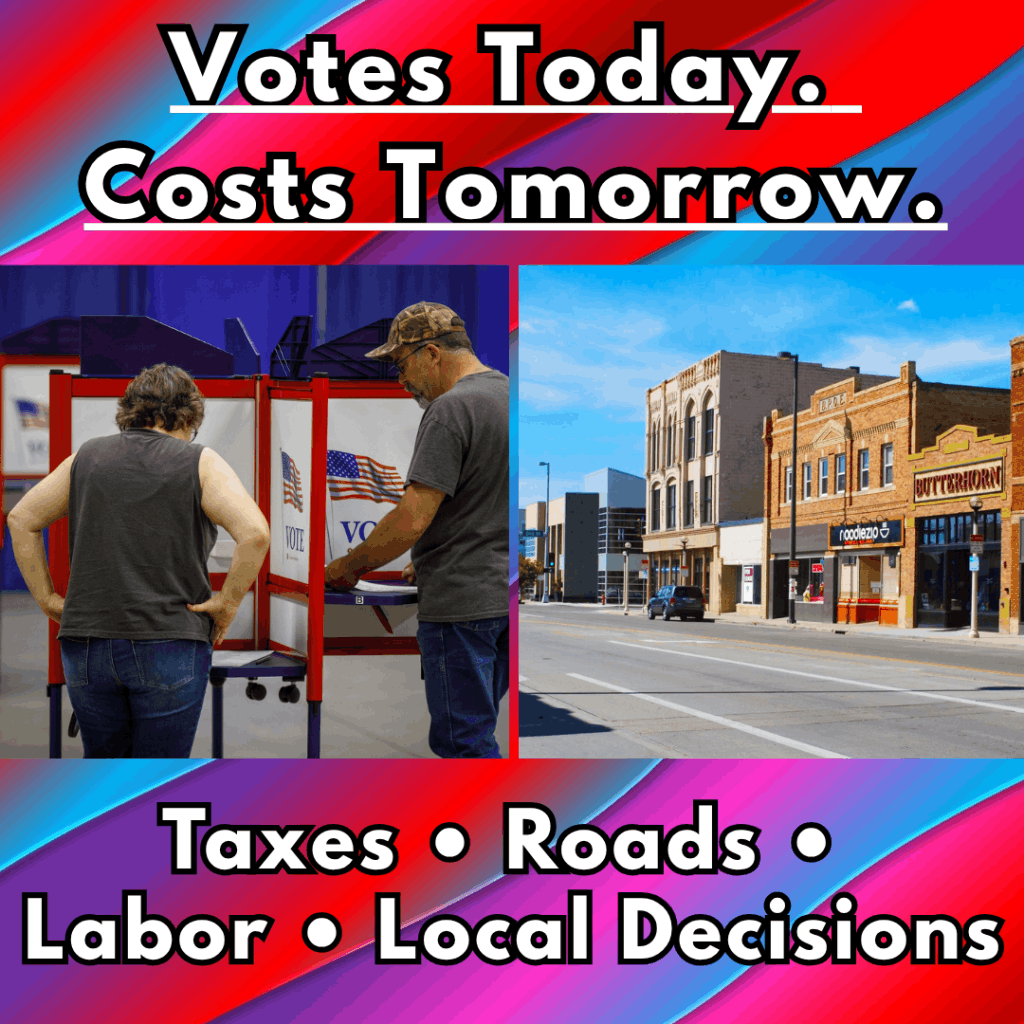
Today is North Dakota’s Primary Election Day, with voters deciding contested races, a statewide ballot measure, and several local questions. The Secretary of State’s election page points voters to June 9 primary election information, while the ballot measure page lists Constitutional Measure 1 for the 2026 Primary Election ballot.
Who it affects:
Retailers, restaurants, contractors, employers, accountants, bookkeepers, local governments, real estate interests, vendors, and any business affected by local tax collection, infrastructure funding, or future policy decisions.
Why it matters:
Election results can affect business before owners see a formal rule change. Local tax questions may change what businesses collect, how point-of-sale systems are updated, how invoices are prepared, and how customers experience local costs. Primary results also determine who advances to November, shaping the policy environment businesses will be watching through the rest of the year.
Source links:
https://www.sos.nd.gov/elections
https://www.sos.nd.gov/elections/voter/ballot-measures/measures-ballot
https://www.sos.nd.gov/sites/default/files/documents/elections/2026-primary-measure-guide.pdf
https://northdakotamonitor.com/2026/06/05/what-north-dakotans-need-to-know-before-tuesdays-primary/
2. Local Tax / Retail: Sales tax proposals could change checkout math in several communities
What changed:
Two counties and 11 North Dakota cities are asking voters this June to approve sales tax increases for public safety, streets, parks, and other local services. North Dakota Monitor reported the proposals in the context of the state’s new 3% cap on year-to-year property tax increases.
Who it affects:
Retailers, restaurants, lodging businesses, contractors, service businesses, online sellers, bookkeepers, accountants, and any business collecting local sales tax.
Why it matters:
A local sales tax change is not just a government finance story. It affects checkout systems, customer receipts, contracts, invoices, bookkeeping, and tax remittance. Businesses in affected communities should watch tonight’s results and then verify any effective dates through the Office of State Tax Commissioner before changing systems. The Tax Department’s local tax page tracks city and county rate or boundary changes.
Source links:
https://northdakotamonitor.com/2026/05/26/about-a-dozen-north-dakota-communities-propose-sales-tax-increases-this-june/
https://www.tax.nd.gov/city-and-county-local-tax-rate-changes
https://www.tax.nd.gov/business/sales-and-use-tax
3. Statewide Sales / Cashflow: Q1 taxable sales rose, but the pressure is not evenly felt
What changed:
North Dakota taxable sales and purchases increased 4.24% in the first quarter of 2026 compared with the same period in 2025, totaling $5.96 billion.
Who it affects:
Retailers, contractors, wholesalers, local governments, accountants, suppliers, lenders, and business owners watching whether customer spending is holding up.
Why it matters:
A statewide increase is encouraging, but it does not mean every business is experiencing stronger margins. Higher taxable sales can reflect stronger activity, higher prices, or both. Owners should compare statewide data against their own receipts, inventory costs, wage pressure, customer counts, and profit margins before assuming conditions are improving across the board.
Source link:
https://www.tax.nd.gov/news/tax-commissioner-releases-first-quarter-2026-taxable-sales-data
4. Rural Business / Financing: More rural operators may qualify for Development Fund support
What changed:
The North Dakota Development Fund expanded eligibility to include non-primary sector businesses, opening financing opportunities to more rural businesses and community organizations that previously may not have qualified.
Who it affects:
Rural retailers, service businesses, childcare-related businesses, food businesses, repair shops, small-town operators, community organizations, and local economic development groups.
Why it matters:
Many small communities need businesses that do not fit the traditional “primary sector” category but are still essential to local stability. This change may help rural operators explore financing for equipment, expansion, working capital, or community-use projects before walking away from growth plans.
Source links:
https://www.commerce.nd.gov/news/north-dakota-development-fund-expands-eligibility-support-rural-businesses
https://www.commerce.nd.gov/economic-development-finance/development-fund
https://bnd.nd.gov/loans/business/
5. Workforce / Hiring: Employers still need data-driven recruiting, not guesswork
What changed:
Job Service North Dakota continues to provide employer tools and labor market information, including job openings data through the state’s workforce dashboard. The state also continues pointing employers toward workforce programs such as the Regional Workforce Impact Program.
Who it affects:
Employers hiring for construction, food service, retail, healthcare, trades, transportation, seasonal work, office support, and professional services.
Why it matters:
Hiring pressure is not just about whether applicants exist. It is about wages, schedules, training time, reliability, benefits, and whether a business can keep operating at full capacity. Employers should use labor market data to tighten job descriptions, compare compensation expectations, and plan realistically for training and retention.
Source links:
https://www.jobsnd.com/home
https://insights.nd.gov/Workforce/JobOpenings
https://www.commerce.nd.gov/workforce/workforce-programs/regional-workforce-impact-program
6. Agriculture / Agribusiness: Crop and pest conditions now affect more than producers
What changed:
USDA’s North Dakota Crop Progress and Condition reporting is active for the growing season, and NDSU’s Crop & Pest Report is publishing seasonal updates for producers and agribusinesses.
Who it affects:
Farmers, agronomists, elevators, chemical and seed suppliers, implement dealers, truckers, fuel suppliers, rural lenders, repair shops, and Main Street businesses in farm communities.
Why it matters:
Early-season field conditions affect buying patterns, service calls, spraying schedules, parts demand, fuel use, grain movement, and rural cashflow expectations. Businesses tied to agriculture should monitor weekly crop and pest updates now rather than waiting for harvest-season headlines.
Source links:
https://www.nass.usda.gov/Statistics_by_State/North_Dakota/Publications/Crop_Progress_%26_Condition/index.php
https://www.ndsu.edu/agriculture/ag-hub/ag-topics/crop-production/crop-pest-report
7. Energy / Oilfield Services: Higher prices do not automatically mean faster drilling
What changed:
Reuters reported that North Dakota oil operators remain cautious about ramping up drilling despite stronger oil prices. The report cited state regulator comments that producers are largely sticking to budgets set earlier, while May rig counts remained at 26 and active hydraulic fracturing crews stood at 13.
Who it affects:
Oilfield service companies, welders, truckers, equipment suppliers, housing providers, parts shops, restaurants, and western North Dakota communities.
Why it matters:
Oil patch activity affects far more than drilling companies. But higher prices do not guarantee immediate expansion. Businesses tied to energy should prepare for moderate activity and watch for sustained price strength, permit activity, completions, and operator budget changes before making major staffing or equipment decisions.
8. Rural Development / Grants: June deadlines are close for business-support projects
What changed:
USDA Rural Development lists June deadlines for Rural Business Development Grants in North Dakota, including a June 15 deadline for Strategic Economic and Community Development applications and a June 30 deadline for remaining applicants.
Who it affects:
Rural development groups, nonprofits, local governments, tribal entities, business incubators, small-business support organizations, and communities working to support local employers.
Why it matters:
This is a near-term opportunity, not a long-range planning item. Communities trying to support business districts, rural services, small manufacturers, value-added agriculture, entrepreneurship, or business training should act quickly if they have a project that fits.
Source link:
https://www.rd.usda.gov/programs-services/business-programs/rural-business-development-grants-4
Risk / Opportunity
Risk:
Election outcomes, local sales tax proposals, hiring pressure, fuel costs, and cautious oilfield activity could quietly change operating costs before businesses feel the full effect.
Opportunity:
Businesses that watch election results, verify local tax changes, monitor workforce data, and use rural financing or grant opportunities may be better positioned than competitors who wait until changes show up in invoices, payroll, or customer traffic.