

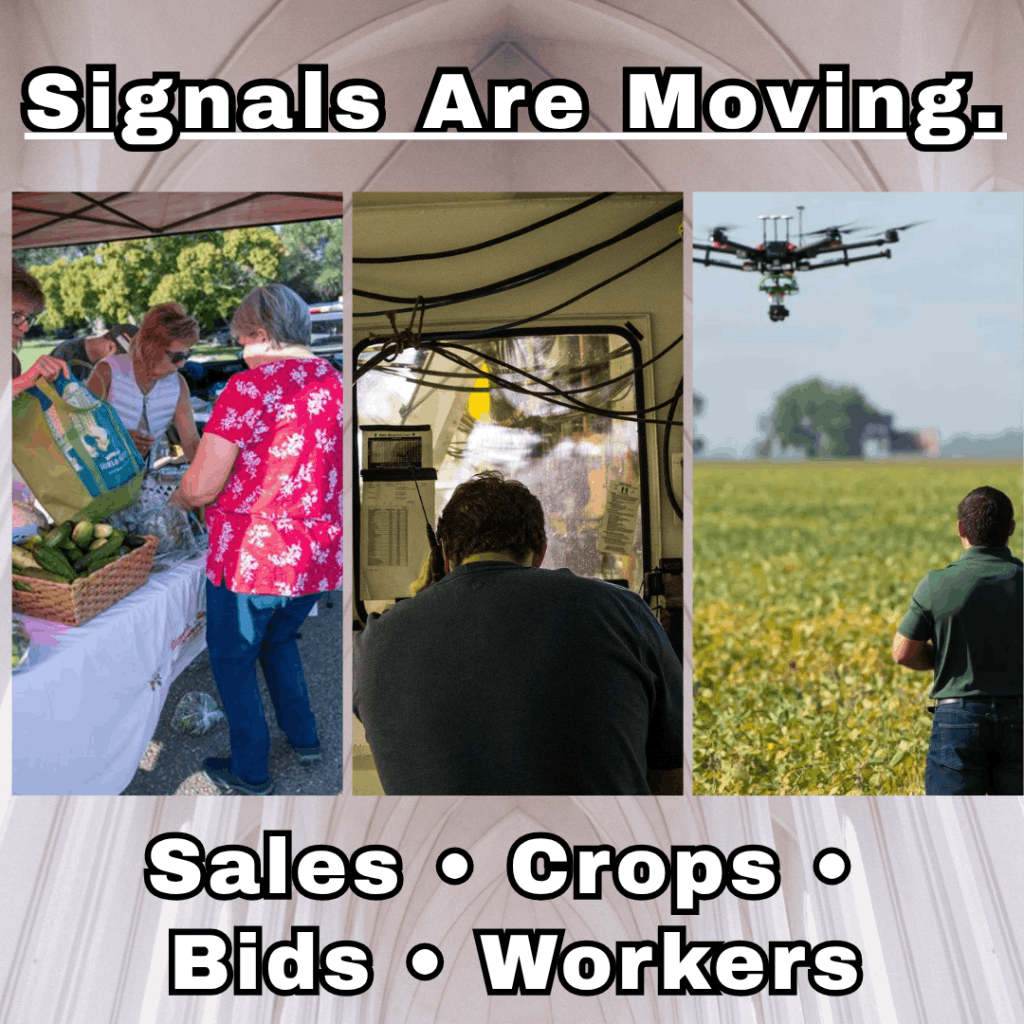
What changed • Who it affects • Why it matters
Statewide Business Pulse
▲ Moving: Ag technology, UAS/autonomous systems, local food vendors, value-added agriculture, workforce recruitment
▬ Stable: Core oil production, professional services, retail essentials, local service businesses
▼ Down / Under Pressure: Employers needing workers, small manufacturers/import-reliant businesses, seasonal businesses facing cost pressure
Watch: June interim committee activity, June 9 primary-related policy signals, ag input/crop pressure, oilfield drilling caution, local sales tax exposure
Today’s Signals
Ag Technology / Fargo-Moorhead: AgTech Week is days away
What changed: AgTech Week 2026 runs June 8–12 in Fargo, bringing together producers, entrepreneurs, investors, researchers, policymakers, and ag-tech companies.
Who it affects: Farmers, agribusinesses, equipment dealers, drone/UAS companies, software firms, investors, food production companies, and workforce partners.
Why it matters: This is a business-development signal, not just an agriculture event. It positions Fargo and North Dakota as a place where agriculture, technology, research, and capital can meet in one room.
Source: https://www.agtechweekfargo.com/
Agriculture / Value-Added Production: State ag funds are moving into new projects
What changed: The North Dakota Department of Agriculture announced $1.33 million in Agriculture Diversification and Development awards for eight projects and $340,524.50 in APUC awards for six projects, both approved at late-May meetings.
Who it affects: Food processors, value-added ag businesses, rural manufacturers, local producers, lenders, equipment suppliers, and communities looking to keep more ag dollars local.
Why it matters: These awards point toward continued investment in turning raw farm products into higher-value business activity inside North Dakota. That can create ripple effects for construction, packaging, logistics, marketing, retail, and local employment.
Source: https://www.ndda.nd.gov/news
Workforce / Hiring: North Dakota still has a tight labor market
What changed: BLS reported North Dakota’s April unemployment rate at 2.4%, among the lowest in the country, while Job Service North Dakota is holding Fair Chance Job Fairs today in Bismarck, Fargo, and Grand Forks.
Who it affects: Restaurants, contractors, healthcare support businesses, retail, manufacturers, trucking, childcare, home services, and any employer trying to fill entry-level or second-chance positions.
Why it matters: Low unemployment sounds positive, but for business owners it often means fewer applicants, higher training burdens, and more pressure to improve scheduling, culture, benefits, and recruiting systems.
Sources:
https://www.bls.gov/news.release/laus.nr0.htm
https://www.jobsnd.com/home
Energy / Oilfield Services: Production rose, but drilling remains cautious
What changed: North Dakota oil and natural gas production increased in March, with the state producing about 1.142 million barrels of oil per day, while Reuters reported that North Dakota had 26 rigs operating in May, unchanged from April, with 13 hydraulic fracturing crews active.
Who it affects: Oilfield service firms, trucking, welding, lodging, restaurants, contractors, equipment suppliers, and western North Dakota communities.
Why it matters: Production strength helps stabilize local economies, but flat rig activity suggests operators are not rushing into aggressive expansion. Businesses tied to the Bakken should plan for steady demand, not assume a sudden boom.
Sources:
https://www.minotdailynews.com/news/local-news/2026/05/nds-oil-natural-gas-production-increases/
https://www.reuters.com/business/energy/us-oil-operators-north-dakota-cautious-drilling-despite-price-rise-2026-05-22/
UAS / Autonomous Systems: North Dakota is marketing itself nationally
What changed: North Dakota Commerce highlighted the state’s presence at AUVSI XPONENTIAL 2026, where “North Dakota Row” showcased UAS, autonomous technology, and aerospace companies. The exhibit featured nine North Dakota companies, with about 15 companies represented overall.
Who it affects: Drone companies, agriculture technology firms, defense contractors, software developers, manufacturers, engineering firms, and workforce training programs.
Why it matters: This is one of North Dakota’s strongest “future economy” lanes. Small businesses should watch for contracting, training, inspection, mapping, ag scouting, security, and maintenance opportunities tied to autonomous systems.
Source: https://www.commerce.nd.gov/news/north-dakota-highlights-autonomous-systems-leadership-auvsi-xponential-2026
Interim Bill Information: Early legislative work is already producing business signals
What changed: Interim committees are active. A June 3 Higher Education Funding Review Committee agenda included a bill draft related to the higher education funding formula and capital construction funding. The June legislative calendar also shows upcoming meetings for Tax Reform and Relief, Budget Section, and other committees.
Who it affects: Contractors, higher-ed vendors, workforce partners, taxpayers, local governments, energy businesses, and employers that depend on trained graduates.
Why it matters: The 2027 session is already being shaped now. Business owners should watch interim activity because early drafts and committee studies often become the bills that affect taxes, workforce, regulation, infrastructure, and operating costs later.
Sources:
https://ndlegis.gov/assembly/69-2025/committees/interim/higher-education-funding-review-committee
https://ndlegis.gov/calendar
Retail / Local Sellers: Sales tax remains a pricing pressure point
What changed: North Dakota’s state sales tax remains 5% for most retail sales, with local city and county taxes added in many areas.
Who it affects: Retail stores, online sellers, vendors, crafters, food trucks, lodging, restaurants, event vendors, contractors selling taxable goods, and service businesses with product add-ons.
Why it matters: When customers are already sensitive to price, sales tax can affect the final checkout number. Businesses should make sure their point-of-sale systems are current, especially if selling across city or county lines.
Source: https://www.tax.nd.gov/sales-and-use-tax
Risk / Opportunity
Risk: Tight labor, tariff-related input costs, cautious oilfield drilling, and sales-tax complexity can quietly squeeze margins before owners realize where the money is leaking.
Opportunity: North Dakota is getting attention in ag-tech, autonomous systems, value-added agriculture, and workforce development. Businesses that connect early with these ecosystems may find new customers, contracts, partnerships, or funding lanes before the crowd catches up.