

Statewide Business Pulse
Workforce ▲
Agriculture ▲
Energy ▲
Transportation ▲
Construction ▲
Retail ▲
Technology ▲
Healthcare ▬
Outdoor Economy ▬
Government / Nonprofit ▲
Legend: ▲ new signal · ▬ stable
🌦️ Weather Impact (Immediate Business + Agriculture)
What’s happening
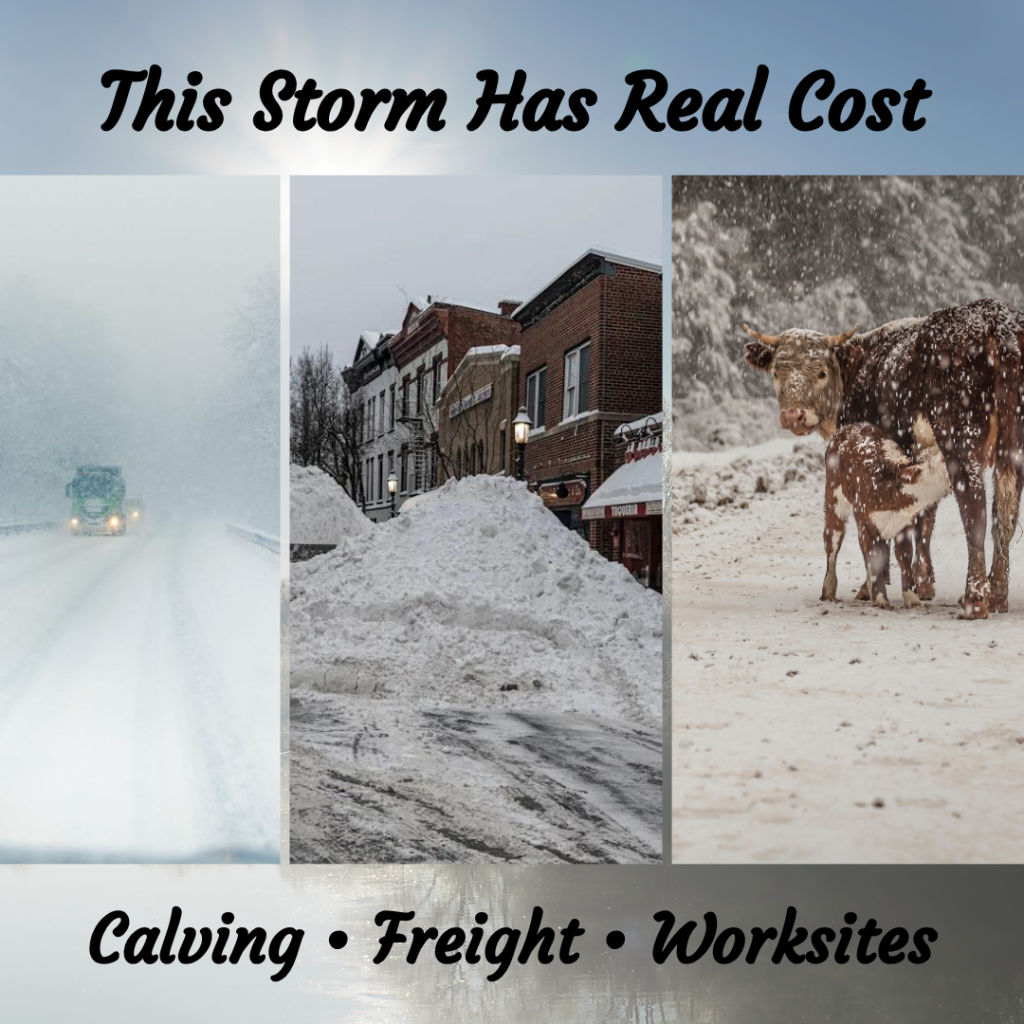
- Heavy, wet snow with strong winds across much of North Dakota
- Rapid swings between snow, rain, and freezing conditions
- Travel and outdoor work disruptions expected through the weekend
🐄 Agriculture Impact (Critical Right Now)
Spring calving is underway
This weather creates high-risk conditions for livestock operations:
Immediate risks
- Newborn calf mortality from cold + wind exposure
- Increased labor demands (round-the-clock checks)
- Feeding and access challenges
- Mud + snow conditions increasing disease risk
Operational impact
- Producers shifting herds to shelter or windbreaks
- Increased feed, bedding, and labor requirements
Financial impact
- Losses during calving season are immediate and not easily recoverable
- Short-term cost spikes in labor, feed, and veterinary care
👉 This is one of the most direct weather-to-revenue impact windows of the year in North Dakota
🚛 Broader Business Impact
- Freight delays and rerouting
- Construction slowdowns
- Increased fuel and equipment usage
- Short-term retail slowdown
- Potential financial stress in ag-related sectors
Today’s Signals
• The U.S. Census Bureau reports construction spending remains elevated, indicating continued project activity despite cost pressures.
Source: https://www.census.gov/construction/c30/
• North Dakota’s LIFT housing program is open, supporting development financing and workforce housing projects.
Source: https://www.nd.gov/news
• The National Federation of Independent Business reports labor shortages remain a top constraint, though hiring growth is stabilizing.
Source: https://www.nfib.com/surveys/small-business-economic-trends/
• Global fertilizer supply remains tight due to export restrictions and geopolitical disruption, continuing to impact spring purchasing.
Source: https://www.reuters.com/business
Pattern Watch
The signal today is “short-term disruption, long-term pressure.”
Weather is the immediate disruptor, but underlying issues—labor shortages, input costs, and financing—remain in place.
Industry Briefs
Agriculture ▲
Weather conditions are directly impacting spring calving operations, increasing risk, labor demand, and costs.
Why it matters
This is a direct economic impact event, not just a weather inconvenience.
Construction ▲
Construction spending remains strong, but weather will temporarily slow jobsite activity.
Source: https://www.census.gov/construction/c30/
Workforce / Labor ▲
Labor shortages continue across multiple industries, limiting growth capacity.
Source: https://www.nfib.com/surveys/small-business-economic-trends/
Retail ▲
Consumer demand remains steady, but weather will likely reduce short-term foot traffic.
Transportation / Logistics ▲
Freight movement will be impacted by:
- road conditions
- visibility
- route delays
Energy ▲
Weather may increase:
- heating demand
- fuel consumption
- short-term energy usage
Technology ▲
No new developments today, but infrastructure demand remains a long-term growth driver.
Healthcare ▬
No new statewide operational changes surfaced today.
Government / Economic Development ▲
The LIFT housing program signals continued focus on:
- housing supply
- workforce attraction
- development support
Source: https://www.nd.gov/news
Outdoor Economy ▬
Outdoor activity will be limited due to weather conditions.
Two Numbers & a Nudge
Two Numbers
• Heavy snow + wind event — impacting operations statewide
• Construction spending still elevated — indicating continued underlying activity
Source: https://www.census.gov/construction/c30/
Nudge
If your business touches agriculture, transportation, or outdoor work, the next 48–72 hours are about managing disruption, not pushing productivity.
Headwind / Tailwind
Headwind
Severe weather + labor shortages + rising input costs.
Tailwind
Underlying demand and project activity remain intact once disruption passes.