

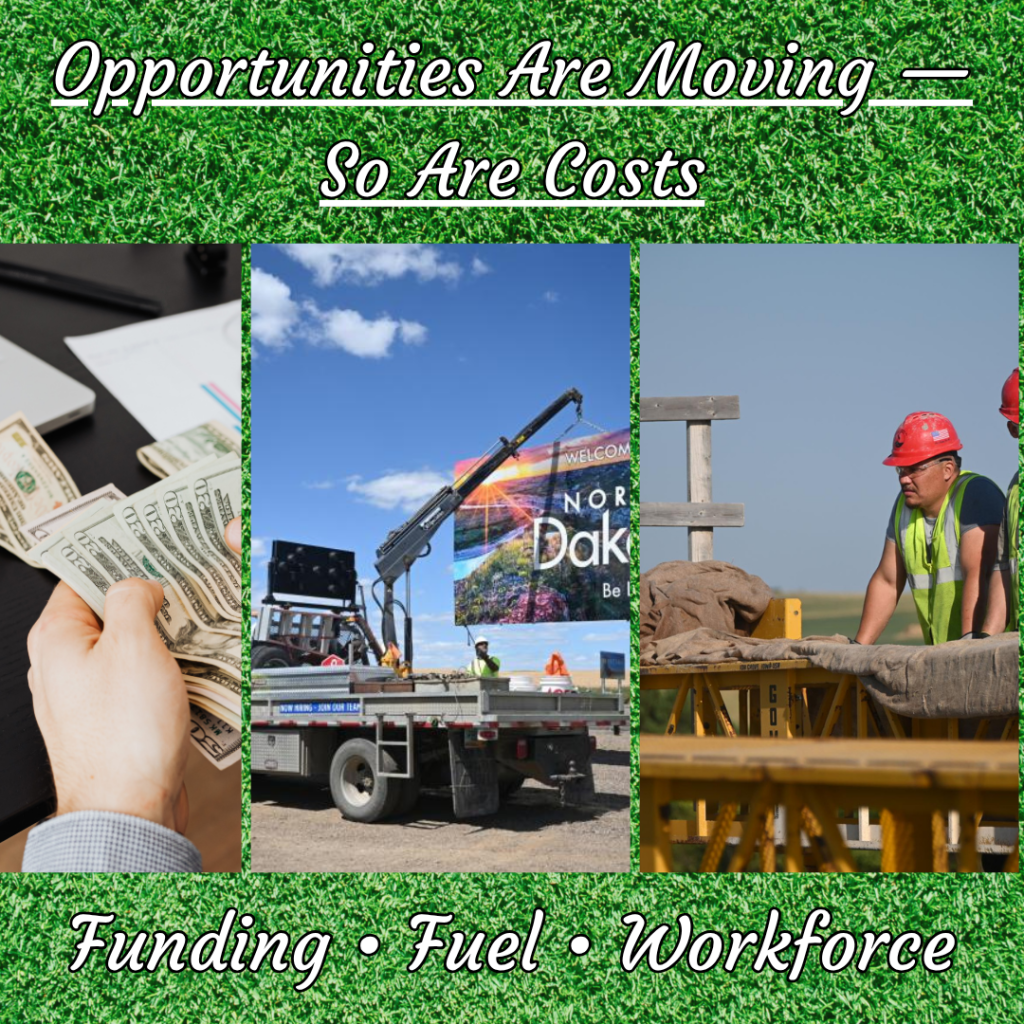
What changed • Who it affects • Why it matters
Statewide Business Pulse
▲ Moving: Tourism development, rural business financing, road construction, startup support
▬ Stable: General workforce conditions, oilfield activity, professional services
Watch: Diesel/fuel costs, planting pace, small-town project financing, construction detours
Today’s Signals
Rural Business Financing Opens Wider
What changed: The North Dakota Development Fund expanded eligibility to include non-primary sector businesses, certain nonprofits, economic development groups, chambers, and political subdivisions in communities under 10,000 people or more than 5 miles outside city limits. Loans may be used for working capital, equipment, real estate, or interim construction needs.
Who it affects: Rural retailers, service businesses, community organizations, lenders, contractors, and small-town economic development groups.
Why it matters: This gives more small-town projects a financing path that was previously limited, but applicants still need a lead lender, equity, and a feasible plan.
Source: https://www.nd.gov/news/north-dakota-development-fund-expands-eligibility-support-rural-businesses
Tourism Money Is Moving Into Local Projects
What changed: North Dakota awarded $4 million in Destination Development Grants after receiving 103 applications from 61 communities. Funded projects include lodging, RV sites, agritourism, outdoor recreation, dining, retail, and visitor-service improvements.
Who it affects: Tourism businesses, restaurants, lodging providers, contractors, rural communities, event planners, and local retailers.
Why it matters: Tourism investment creates spillover work for construction, food service, maintenance, staffing, fuel stops, and Main Street businesses—not just the grant recipients.
Source: https://www.commerce.nd.gov/news/north-dakota-awards-4m-drive-tourism-growth-and-local-development
North Dakota Labor Remains Tight
What changed: BLS reported North Dakota’s March unemployment rate at 2.5%, below the national rate of 4.3% and among the lowest in the country.
Who it affects: Employers hiring seasonal workers, construction crews, hospitality businesses, manufacturers, oilfield services, ag suppliers, and retail.
Why it matters: Low unemployment is good news for workers, but it keeps hiring pressure high. Businesses may need to plan earlier, cross-train current staff, and simplify job roles where possible.
Source: https://www.bls.gov/news.release/laus.nr0.htm
Road Work Is Entering the Busy Season
What changed: NDDOT is directing drivers and businesses to its active construction project pages and ND Roads map for current project timelines, status, and travel impacts across western, central, and eastern North Dakota.
Who it affects: Contractors, delivery companies, service trucks, retailers, commuters, tourism businesses, and customers traveling across town or across the state.
Why it matters: Detours and changing work zones can affect delivery timing, employee schedules, customer access, and appointment windows. Businesses near projects should communicate access routes before customers get frustrated.
Startup Support Deadline Is Close
What changed: Innovate ND applications are open, with entrepreneurs encouraged to apply by May 14, 2026. The program offers coaching and up to $50,000 in reimbursable expenses through two phases.
Who it affects: Startups, rural entrepreneurs, scalable small businesses, tech-enabled service providers, and business coaches.
Why it matters: For business owners testing a new product, market, or expansion idea, this is a near-term support window—not something to leave on the “someday” list.
Fuel and Diesel Pressure Deserve Attention
What changed: U.S. crude, gasoline, and distillate inventories fell for the week ending May 1. Distillates, which include diesel and heating oil, dropped to their lowest level since 2005, according to EIA data cited by Reuters.
Who it affects: Farmers, trucking companies, construction firms, delivery services, oilfield support, landscapers, and any business with fuel-heavy operations.
Why it matters: Diesel pressure during planting and construction season can quickly show up in delivery charges, job bids, field costs, and cash flow.
Risk/Opportunity
Risk: Fuel-sensitive businesses may see costs move faster than customer pricing or project bids can adjust.
Opportunity: Rural businesses now have multiple doors opening at once—tourism investment, broader NDDF eligibility, and startup support through Innovate ND. The businesses that act early, document costs clearly, and talk to lenders or advisors now will have the advantage.