

What changed • Who it affects • Why it matters
Statewide Business Pulse
▲ Moving: Retail, Construction, Hospitality, Ag Services
▬ Stable: Energy Production, Healthcare
▼ Slowing: Small Manufacturing, Office Admin Hiring
Watch: Consumer spending consistency, hiring follow-through, short-term cash flow
Today’s Signals
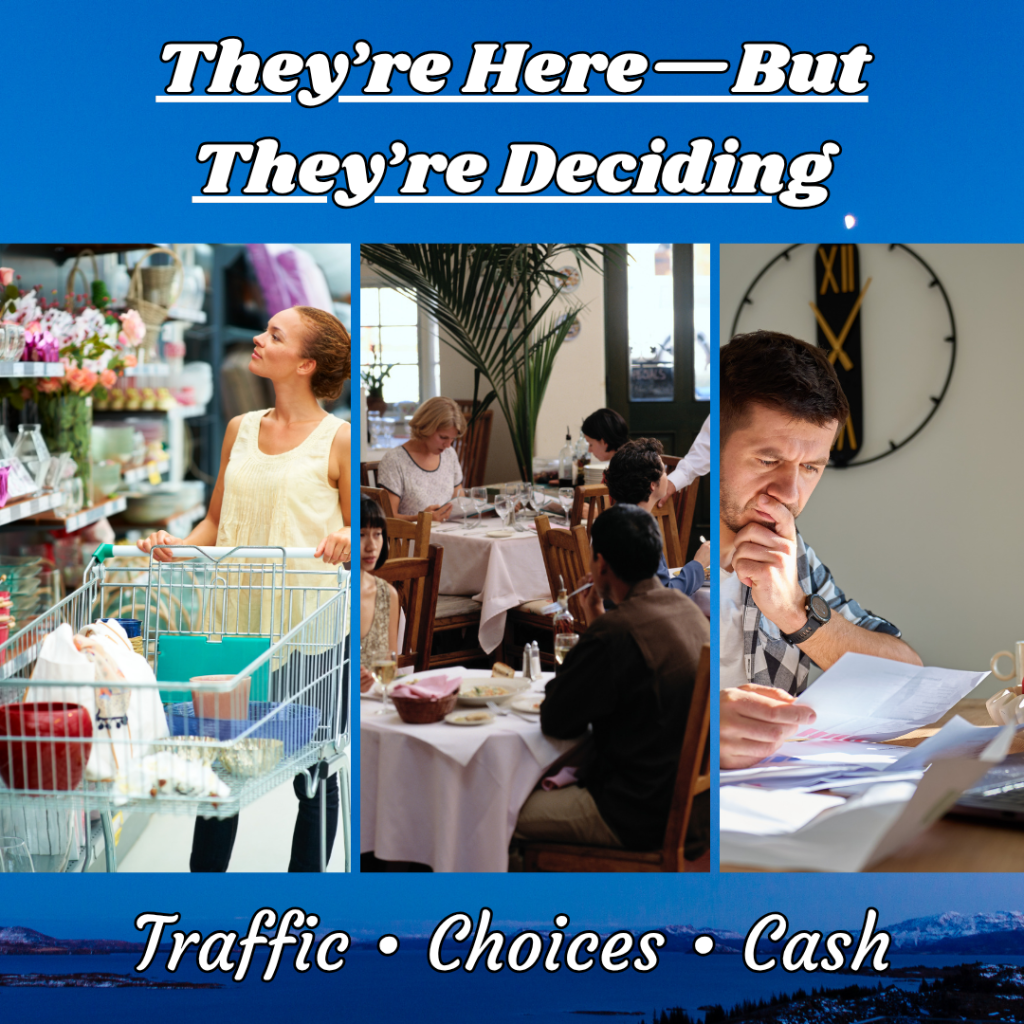
Consumers Are Showing Up—But Spending Smarter
Foot traffic is increasing across North Dakota, but purchase behavior is more selective.
What changed: Seasonal activity is back, but buyers are comparing, delaying, and trading down.
Who it affects: Retailers, restaurants, service providers.
Why it matters: Volume may rise without matching margins—pricing strategy matters more than traffic right now.
Hiring Intent Is Up—Commitment Is Not
Businesses are posting jobs, but many are slow to finalize hires.
What changed: Caution is creeping into hiring decisions despite workload demand.
Who it affects: Small businesses, trades, admin roles, entry-level workforce.
Why it matters: Being understaffed is becoming a choice in some cases—risking burnout and missed revenue.
Short-Term Cash Pressure Building Quietly
Operating costs are landing before revenues fully catch up for many small businesses.
What changed: Inventory purchases, seasonal ramp-up costs, and delayed receivables are overlapping.
Who it affects: Retailers, contractors, service-based businesses.
Why it matters: Cash timing—not profit—is the pressure point. Businesses that manage cash flow tightly will stay flexible.
Travel & Events Picking Up Across the State
Local and regional travel activity is increasing as we move into event season.
What changed: Bookings, short stays, and event traffic are trending upward.
Who it affects: Hospitality, food service, local attractions, Main Street businesses.
Why it matters: Secondary spending (food, fuel, retail) rises with movement—this is a ripple opportunity beyond tourism itself.
Headwind / Tailwind
Headwind:
Cautious decision-making—by both consumers and employers—is slowing momentum just enough to create friction.
Tailwind:
People are active again. Movement, traffic, and demand are real—businesses that adjust quickly can capture it.
Bottom Line
This isn’t a slow economy—it’s a selective one. Customers are out, but they’re thinking. Businesses that stay sharp on pricing, staffing, and cash timing will outperform those waiting for “normal” to return.