

Federal Business Pulse
Workforce ▲
Agriculture ▲
Energy ▲
Transportation ▲
Construction ▬
Retail ▬
Technology ▲
Healthcare ▲
Finance ▲
Government / Compliance ▲
Legend: ▲ new signal · ▬ stable
Today’s Signals
• The Federal Reserve signaled it will hold interest rates steady for now, while watching inflation and labor market conditions closely.
Source: https://www.federalreserve.gov/monetarypolicy.htm
• The U.S. Department of Labor reported continued strength in job openings, with hiring demand still outpacing supply in several sectors.
Source: https://www.bls.gov/jlt/
• The IRS is approaching the April 15 tax deadline, with reminders for estimated payments and small business filings.
Source: https://www.irs.gov/newsroom
• The U.S. Department of Energy continues funding programs tied to grid resilience and domestic energy production, including modernization of infrastructure.
Source: https://www.energy.gov/articles
Pattern Watch
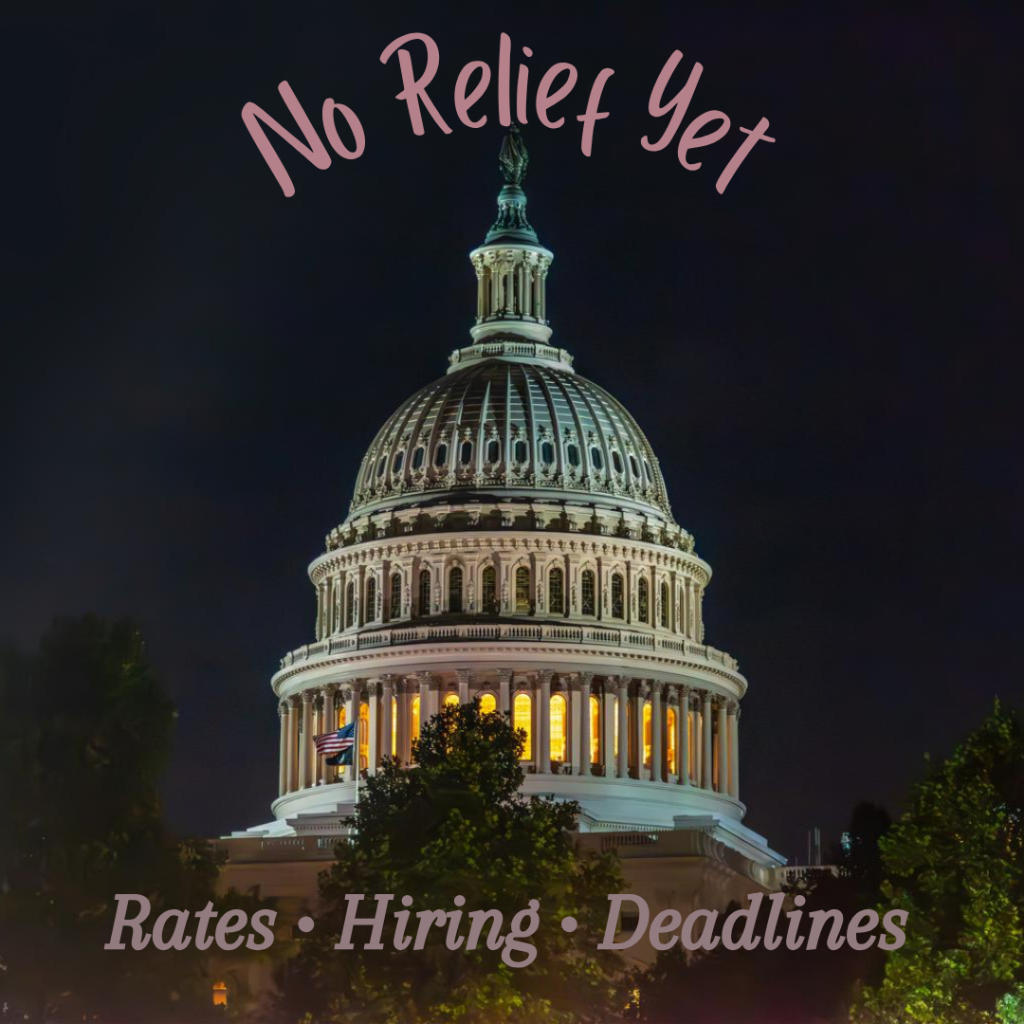
The federal signal is “steady pressure” — interest rates are not dropping yet, hiring remains competitive, and compliance deadlines are approaching. Businesses are operating in a stable but tight environment.
Industry Sections
Workforce / Labor ▲
Job openings remain elevated across multiple sectors, indicating continued competition for workers.
Source: https://www.bls.gov/jlt/
Why it matters
Employers may need to adjust recruiting strategies, wages, or retention efforts.
Finance / Lending ▲
The Federal Reserve is maintaining current interest rate levels while monitoring inflation trends.
Source: https://www.federalreserve.gov/monetarypolicy.htm
Why it matters
Borrowing costs remain elevated, affecting expansion plans, equipment financing, and real estate decisions.
Government / Compliance ▲
The IRS is emphasizing preparation for the April 15 filing deadline, including estimated tax payments.
Source: https://www.irs.gov/newsroom
Why it matters
Missed deadlines can result in penalties and cash flow strain.
Energy ▲
Federal investment continues in grid reliability and domestic energy infrastructure, supporting long-term supply stability.
Source: https://www.energy.gov/articles
Why it matters
Energy infrastructure spending influences construction, manufacturing, and regional economic activity.
Agriculture ▲
Farm policy discussions remain active in Washington, including issues tied to biofuels and crop support programs.
Transportation / Logistics ▲
Fuel costs and infrastructure funding remain key federal factors affecting freight and supply chains.
Technology ▲
Federal focus on AI, cybersecurity, and infrastructure modernization continues to drive investment and regulatory attention.
Healthcare ▲
Federal healthcare programs continue focusing on cost control and workforce support, particularly in rural and underserved areas.
Construction / Real Estate ▬
Construction remains steady but influenced by interest rates and labor availability.
Retail ▬
Consumer spending remains stable but cautious under current interest rate conditions.
Ongoing Watch
• April 15 — federal tax deadline
https://www.irs.gov/newsroom
• Federal Reserve interest rate outlook
https://www.federalreserve.gov/monetarypolicy.htm
• Labor market conditions
https://www.bls.gov
Two Numbers & a Nudge
Two Numbers
• April 15 — key federal tax deadline
https://www.irs.gov/newsroom
• Elevated job openings — continued labor demand
https://www.bls.gov/jlt/
Nudge
If your business relies on financing, hiring, or compliance, the next few weeks are about staying ahead of deadlines and costs rather than reacting to them.
Headwind / Tailwind
Headwind
Higher borrowing costs and labor competition continue to pressure margins.
Tailwind
Stable federal policy and continued infrastructure investment provide a predictable operating environment.