
Cross-Sector (all businesses, e-commerce, freelancers, home-based)
NEW/UPDATED local sales & use taxes
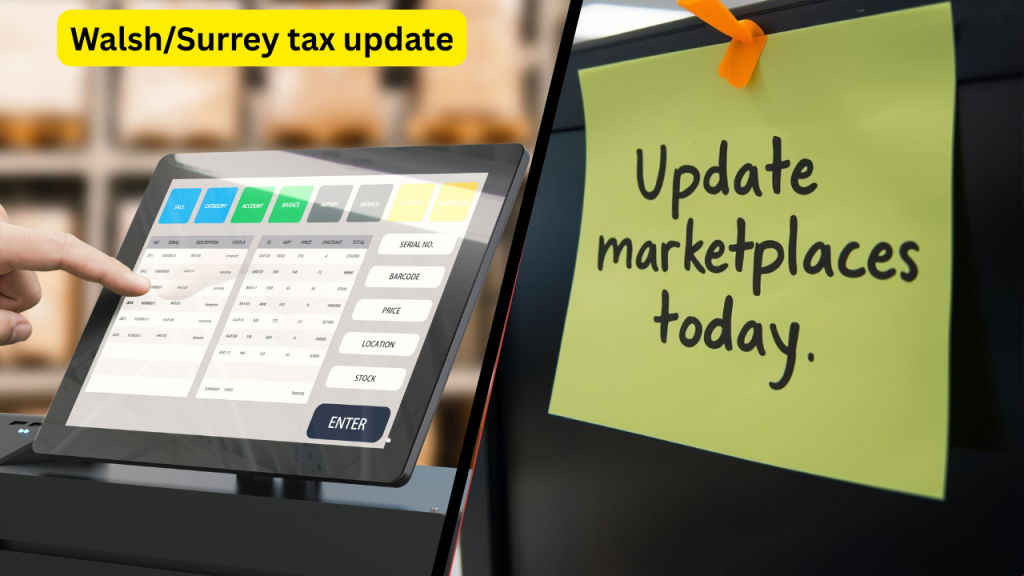
Walsh County increased its county sales/use/gross receipts tax to 1% (refund cap $50/sale) effective Jan 1, 2026; City of Surrey raised its city sales/use/gross receipts tax to 3% (cap $25/sale). ND Tax also posted its 2026 “Local Taxes by Location” guideline.
Why it matters: Remote sellers, marketplace facilitators (Amazon/Etsy/eBay), and local retailers must update point-of-sale, checkout, and marketplace settings to the new rates/caps to avoid under-collection and assessments.
Who’s affected: Any seller shipping to or operating in Walsh County or Surrey; marketplace facilitators; hospitality and contractors bidding work in those jurisdictions.
Dates: Already effective Jan 1, 2026.
Sources (copyable):
-
ND Tax – Local Option Taxes index: https://www.tax.nd.gov/business/sales-use-tax/local-option-taxes
-
ND Tax – City sales & use taxes (Surrey listed): https://www.tax.nd.gov/business/sales-use-tax/local-option-taxes/city-sales-and-use-taxes
-
ND Tax – County sales & use taxes (Walsh listed): https://www.tax.nd.gov/business/sales-use-tax/local-option-taxes/county-taxes
-
ND Tax – Guidance hub (for “Local Taxes by Location” guide): https://www.tax.nd.gov/business/sales-use-tax
Payroll, HR & Workforce
UPDATED for 2026: Unemployment Insurance taxable wage base set at $46,600
Job Service ND set the 2026 UI taxable wage base at $46,600 and published the year’s rate schedules.
Why it matters: Higher wage base increases employer UI contributions; adjust payroll systems and Q1 estimates.
Who’s affected: All ND employers processing unemployment insurance.
Date: Effective Jan 1, 2026.
Sources (copyable):
-
Job Service ND – Employer UI resources: https://www.jobsnd.com/unemployment-business/employer-resources
-
Job Service ND – Unemployment Insurance for Businesses: https://www.jobsnd.com/unemployment-business
Energy, Utilities & Oil/Gas
NEW rate rider (Xcel/NSP): Renewable Energy Rider increased
Xcel/NSP Renewable Energy Rider increased from $0.002042 to $0.002437 per kWh for energy billed Jan 1, 2026 onward (≈ $0.30/month on 750 kWh; commercial varies).
Why it matters: Expect slightly higher electric bills; incorporate into 2026 budgets/quotes.
Who’s affected: Xcel/NSP electric customers in ND (homes, storefronts, farms, data centers, hospitality).
Source (copyable):
-
Xcel Energy – North Dakota rates & regulatory filings: https://www.xcelenergy.com/company/rates_and_regulations/rates/north_dakota
NEW industry signal: Continental Resources pausing new ND drilling
Continental indicated it’s pausing new drilling in ND while continuing production.
Why it matters: Short-term softness could ripple to field services, housing/hospitality in the patch, and local tax receipts; monitor service demand and staffing.
Who’s affected: Oilfield service firms, lodging/food service in oil counties, local governments.
Date: Statements reported Jan 21, 2026.
Source (copyable):
-
Company/industry coverage (trade & regional business press roundups Jan 21–22, 2026): https://www.google.com/search?q=Continental+Resources+pauses+drilling+North+Dakota+Jan+2026 (use to pull your preferred outlet link)
NEW grants/loans for energy savings (ND Commerce)
ND Commerce announced state energy grants/loans: SEP grants ($7,500–$75,000, typical 20% match, apps due Mar 1, 2026 for 2026 plan), EECBG (rolling, no match), Energy Conservation Grants (up to 50%, cap $100,000, rolling), and Energy Efficiency Revolving Loans (via Lake Agassiz).
Why it matters: Near-term funding to cut utility costs or upgrade facilities; partner with your city/county/school on joint projects.
Who’s affected: Local governments, schools, nonprofits; ND businesses via loan option and public-private projects.
Sources (copyable):
-
State Energy Program (SEP): https://ndgov.link/StateEnergy
-
EECBG: https://ndgov.link/EECBG
-
Energy Conservation Grant (ECG): https://ndgov.link/ECG
-
Energy Efficiency Revolving Loan (Lake Agassiz): https://lakeagassiz.com
Transportation, Logistics & Weather Operations
NEW/extreme cold alerts & intermittent closures
NWS warns of dangerous wind chills (-45° to -55°F) across ND Thu–Sun; NDDOT recently closed/reopened portions of I-29 due to blizzard conditions.
Why it matters: Expect cold-related delays, diesel/DEF issues, increased outage risk, and worker-safety constraints; adjust delivery schedules and outdoor work.
Who’s affected: Trucking, field crews, ag & construction, retail receiving.
Dates: Jan 22–25, 2026 (extreme cold); closures Jan 18–19 show risk of repeats.
Sources (copyable):
-
NWS Bismarck (hazards/outlook): https://www.weather.gov/bis/
-
ND Travel Information Map (live road status): https://travel.dot.nd.gov/
Healthcare (Providers, Payers, Public Health)
UPDATED Medicaid rates & coverage (effective Jan 1, 2026)
ND HHS posted State Plan changes: +3.2% for nursing facility rates; +2.0% for psychiatric residential treatment; LPNs may provide certain school-based nursing services; updated lodging reimbursement and unlisted professional code payments.
Why it matters: Adjust contract rates, billing, and school health services planning; affects SNFs, PRTFs, and school districts’ Medicaid billing.
Who’s affected: Healthcare providers, school districts, payers.
Source (copyable):
-
ND HHS – Medicaid State Plan & SPAs: https://www.hhs.nd.gov/medicaid/state-plan
Education (K–12, Higher Ed, Private Schools, Training Providers)
NEW initiative: Statewide middle-school math model (NDDPI + New Classrooms)
NDDPI announced work to design a new statewide middle-school math model (grant-supported); stakeholder work begins this winter.
Why it matters: Districts and ed-vendors should watch for pilots/procurement aligned to personalized/competency-based math.
Who’s affected: K-12 districts, tutoring/ed-tech providers, teacher-training orgs.
Date: Announced mid-Jan 2026.
Sources (copyable):
-
NDDPI main site/updates hub: https://www.nd.gov/dpi
-
New Classrooms (about/org): https://newclassrooms.org/
NEW legislative movement: Free school meals expansion advanced in special session
A committee advanced a bill expanding free school meals to 300% FPL / adding funding; full legislative action continues this week.
Why it matters: Could shift school foodservice volumes, vendor contracts, and family budgets statewide.
Who’s affected: School districts, foodservice vendors, families.
Dates: Jan 21–22, 2026 (special session activity).
Source (copyable):
-
ND Legislature – Bill tracking (search by “school meals” special session): https://ndlegis.gov/assembly/
Manufacturing, Technology & Automation
DEADLINE NEAR: Automation Tax Credit apps due Jan 31, 2026
Applications (up to 15% credit on approved automation equipment) must be submitted by Jan 31, 2026; Commerce tightened completeness rules (single 7-business-day fix window).
Why it matters: Last-mile window to reduce 2026 capital costs for factories and qualifying animal-ag processes.
Who’s affected: Primary-sector manufacturers/animal-ag processors and integrators/vendors.
Source (copyable):
-
ND Commerce – Automation Tax Credit: https://www.commerce.nd.gov/business/financial-incentives/automation-tax-credit
Government & Nonprofit Service Providers
UPDATED transparency systems: ND SOS demo Jan 26
The Secretary of State is rolling out an upgraded transparency/records platform with a public demonstration on Jan 26, 2026.
Why it matters: Easier access to filings/records aids grant writers, watchdogs, journalists, and compliance teams.
Who’s affected: Nonprofits, local governments, journalists, businesses tracking entities.
Source (copyable):
-
ND SOS – News & announcements: https://sos.nd.gov/news
Agriculture & Food (incl. cottage food producers)
Program reminder: BND 2026 Grain Inventory Loan Program
BND launched the 2026 Grain Inventory Loan Program (BND share at Base Rate − 0.75%, $100M set-aside) to help producers finance remaining inventory.
Why it matters: Improves cash flow during a tighter year; coordinate with your local lender.
Who’s affected: ND crop producers and ag lenders; downstream haulers/elevators indirectly.
Date: Announced Nov 25, 2025, active in 2026.
Source (copyable):
-
Bank of North Dakota – Programs overview: https://bnd.nd.gov/programs